
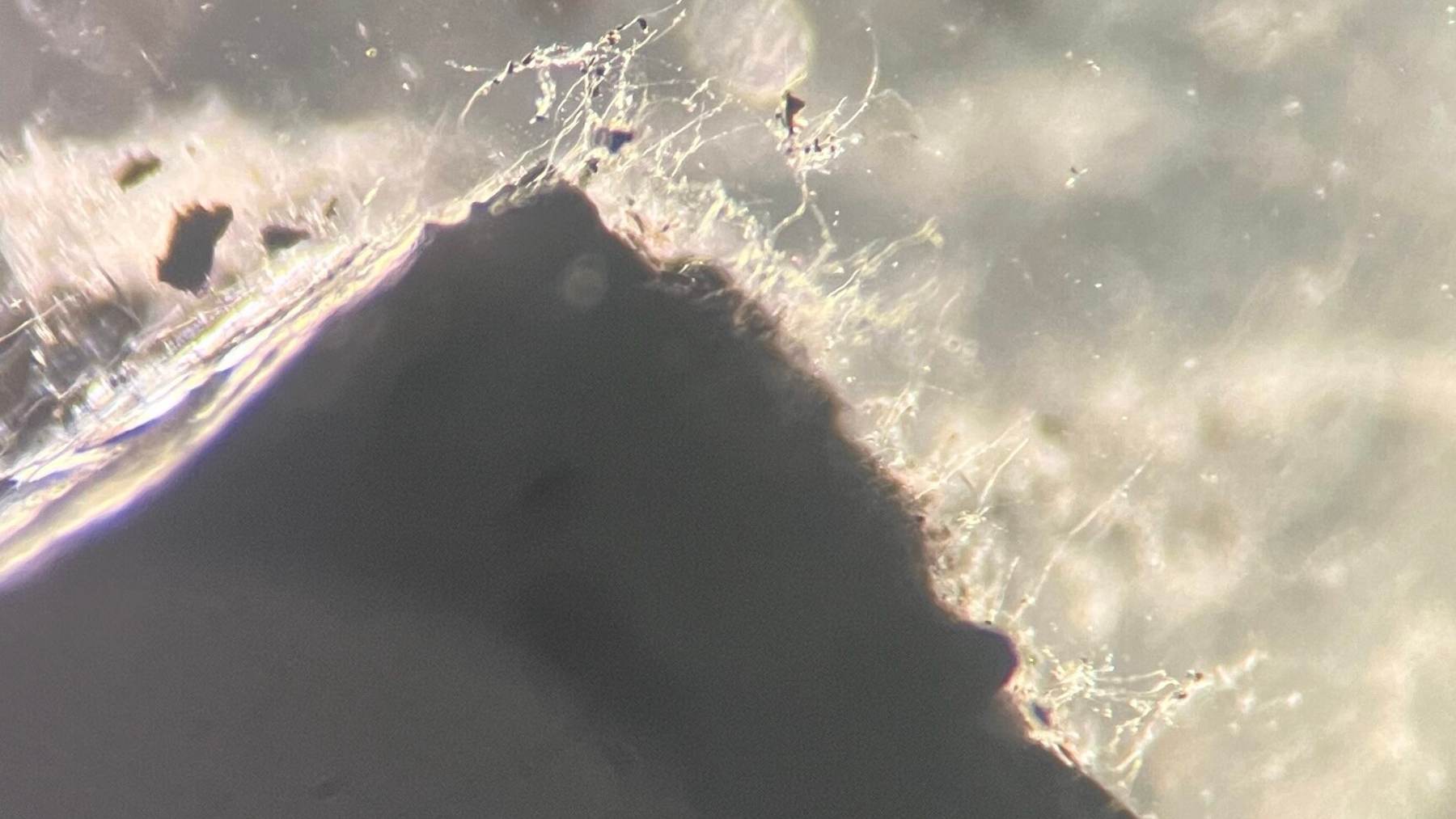
A team led by the University of Michigan has detected between 4,200 and 6,800 fungal cells per milliliter in water drawn from six natural gas wells. The samples come from a rocky formation located 247 to 556 meters below the surface, far from sunlight.
The researchers also obtained 205 pure cultures and identified 13 candidate groups that may represent undescribed species. The finding broadens our understanding of subterranean biodiversity and raises a key question: what role do these fungi play in transforming buried organic matter?
Numbers on Subsurface Fungi
| Data | Value |
|---|---|
| Depth of samples | Between 247 and 556 meters |
| Gas wells sampled | 6 |
| Water collected | 80 liters per well, 480 total (own calculation) |
| C fungal cells per milliliter | Between 4,200 and 6,800 |
| Cells per liter | Between 4.2 and 6.8 million (own calculation) |
| Pure cultures | 205 |
| Genetic groups (OTUs) | 689 |
| Possible new species | 13 |
| Fungal carbon versus bacteria | 1 to 4.7 (about 18% of the total, own calculation) |
80 Liters of Water from Each of the Six Wells
The team collected 80 liters of water from each well in sterile containers. They then integrated microscopic observations, DNA analyses, and culture-based approaches to determine what organisms the samples contained. In total, 480 liters of deep-water were studied.
The wells had been pumping daily for at least ten years since their drilling or last intervention. In addition, the researchers used controls to detect possible contamination and excluded fungi that also appeared in the controls.
Rocks Dating from 359 to 383 Million Years Ago
The Antrim Shale formation formed in the Late Devonian, roughly 359 to 383 million years ago. Its rocks contain organic material derived from algae and wood that became buried in the mud.
What might these fungi be able to exploit from that pantry? The authors propose that some could break down portions of those remains, much like their surface-dwelling relatives degrade resistant plant materials.
The water, however, tells a different story. Three of the six wells preserve a chemical signal compatible with late-Pleistocene meltwater, while the others show signatures of ancient brines or more recent inputs.
689 Genetic Groups and 13 Possible New Species
DNA analysis identified 689 genetic groups of fungi, referred to as operational taxonomic units (OTUs). That figure helps map diversity, but does not automatically equate to 689 distinct, confirmed species.
The 205 cultures obtained in the lab clustered into 67 groups. Of these, 13 fell below a 98% genetic similarity with reference organisms, a threshold used to flag potential new species.
One candidate, provisionally identified as Teichospora sp. QM01, stood out as clearly separate from known species of that genus in the phylogenetic analysis. However, the authors caution that it could be an as-yet-unsequenced species or an uncharacterized lineage, so its identity will require further work.
From Wood Fungi to Methanogenic Archaea
Among the fungi detected is Irpex cf. lacteus, linked to white-rot decay of wood. This type of fungus is interesting because it can break down lignin, a substance that lends strength to plant tissues and makes degradation more challenging.
The hypothesis is that these fungi release simple compounds from buried organic matter. Those products could feed other microorganisms, including methane-producing archaea, thereby supporting a subsurface food chain away from sunlight.
Analyses indicate that the methane in these wells mainly derives from microbial processing of fossil carbon. However, the researchers have not yet been able to attribute a specific portion of that production to fungal activity.
1 Part Fungal Carbon for Every 4.7 Parts Bacteria
The study also estimated how much carbon is held by fungi relative to bacteria, obtaining a median ratio of 1 to 4.7. This is a biomass-based comparison, distinct from simply counting cells in each group. In other words, for every 5.7 parts of carbon from both groups, about one part would come from fungi, roughly 18%.
That calculation should be treated with caution because it uses factors developed for marine microorganisms. The authors themselves note that these have not yet been validated for subsurface fungi, so it is best understood as an initial approximation.
The interest lies in better understanding what happens to buried carbon. “Fungi should be incorporated into models of the subsurface carbon cycle and storage,” says Tim James, coauthor of the study.
Growing in the Laboratory Does Not Prove Subsurface Activity
Getting a fungus to grow in the laboratory demonstrates that it can develop under those conditions. It does not by itself prove that it was active hundreds of meters underground, where some organisms may remain dormant.
The cultures were grown with oxygen, while the studied formation presents predominantly anoxic conditions. This difference may favor the recovery of certain fungi over others and leaves open questions about how these organisms truly function beneath the surface.
Specimens preserved at the University of Michigan Herbarium will enable other teams to study these organisms and refine their identities. The study was published on July 29, 2026 in The ISME Journal.
Image: Quinn Moon and Ronan Montgomery-Taylor / University of Michigan