The Ministry for Ecological Transition (MITECO) is preparing subsidies to insulate homes belonging to vulnerable households. The aim is to enhance their thermal comfort and reduce their electricity and gas bills.
The financing will cover up to 100% of the cost of eligible works. But applications will not be submitted by the families themselves; they will be carried out by social organizations and local public entities.
For now, this remains a project. On November 27, MITECO opened the public consultation for the order that will regulate them. Submissions of comments or objections can be made until January 14.
There is no budget yet, nor a cap per dwelling. Those figures will be set in each call for proposals.
What works will be funded
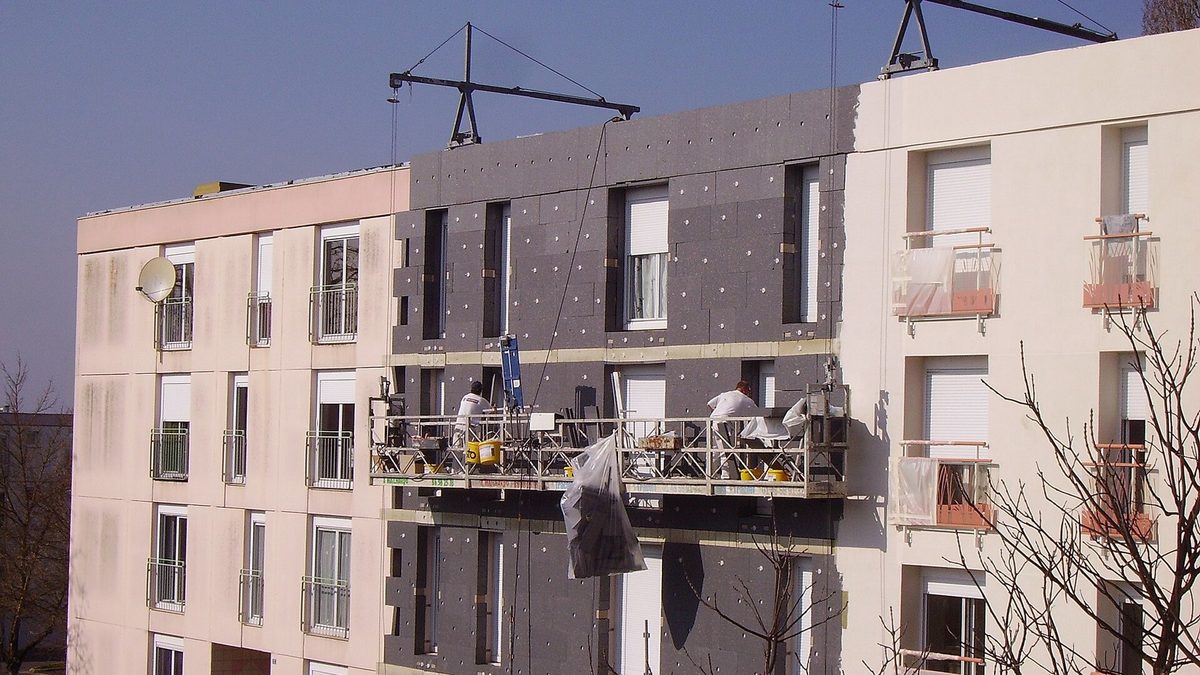
According to the ministry’s note, the subsidies will cover the insulation of façades, ceilings, roofs, and floors. They will also cover the renovation of windows and exterior carpentry, and the installation of shading devices.
Additionally, the measures include improvements to heating and cooling equipment and lighting. The note also mentions photovoltaic self-consumption, solar thermal energy, aerothermal energy (air-source heat pumps), and highly energy-efficient appliances.
The MITECO explains that these measures will be easy to carry out, preferably from inside the homes. This way, residents will not have to leave their residences during the works. The ministry also aims to simplify the procedures.
Who applies for the aid
The order draft clarifies who may apply. They can be nonprofit organizations from the Third Sector of Social Action and from the local public sector. The former must be registered in their registry for at least three years before the call.
These organizations will be responsible for identifying households and carrying out the works. The vulnerable households will be the ultimate beneficiaries, but they will not submit the application themselves.
Management will be handled by the Institute for Diversification and Saving of Energy (IDAE). The subsidies will be allocated on a competitive basis; in other words, they will go to the projects that score best under the order.
Which households can benefit
The project refers to Article 3 of Royal Decree 897/2017 to define the vulnerable consumer. It is the rule that governs the electricity social tariff. Moreover, as stated in the introductory part of the text, the beneficiary must be eligible for both the electric social tariff and the thermal social tariff.
The works will take place at the habitual residence of these individuals. It may be their own home, the property of the entity requesting the aid, or another owner’s home.
If the house is rented
The tenant can also benefit, but with a condition for the owner. The owner must commit in writing not to raise the rent and to keep the house rented or made available under the same conditions for at least three years after the completion of the works.
If the tenant leaves before the end, the house must be rented to another vulnerable household under the same conditions. If the owner fails to comply, they will have to reimburse the cost of the works to the entity, which will then reimburse IDAE.
Advisors to help with bills
The program includes training for the professionals involved. According to MITECO, these advisors will be able to determine what each home needs. They will also explain efficient consumption habits and help residents understand their bills.
And they will assist in applying for both social bonuses for those who meet the requirements but have not yet claimed them.
A pilot project
The order draft presents these subsidies as a pilot project for technological development and innovative actions. Its starting point is the publication “Express Rehabilitation for Vulnerable Homes. Low-Cost Solutions.”
The work was conducted by the Naturgy Foundation and the School of Architecture at the Polytechnic University of Madrid. According to the text, it represents more than five years of research into homes that, on their own, lack resources to maintain basic thermal comfort.
The objective, the project states, is to verify whether those solutions are truly viable for mass support.
Timeline for the works
The project sets a maximum of 18 months to complete the works from the notification of the grant. An extension is possible only for unforeseen and justified circumstances, up to a total of 24 months. After that, the entity will have three months to justify the expenditure.
Funding will come from the funds that the General State Budget transfers to IDAE. It may also come from the Climate Social Fund, according to the note.
The program is part of the National Strategy against Energy Poverty 2026-2030. The ministry explains that it will complement the social bonuses with permanent improvements in homes. The full project text and the questionnaire for objections are on MITECO’s public participation page.
Image: Cjp24 / Wikimedia Commons, CC BY-SA 4.0