
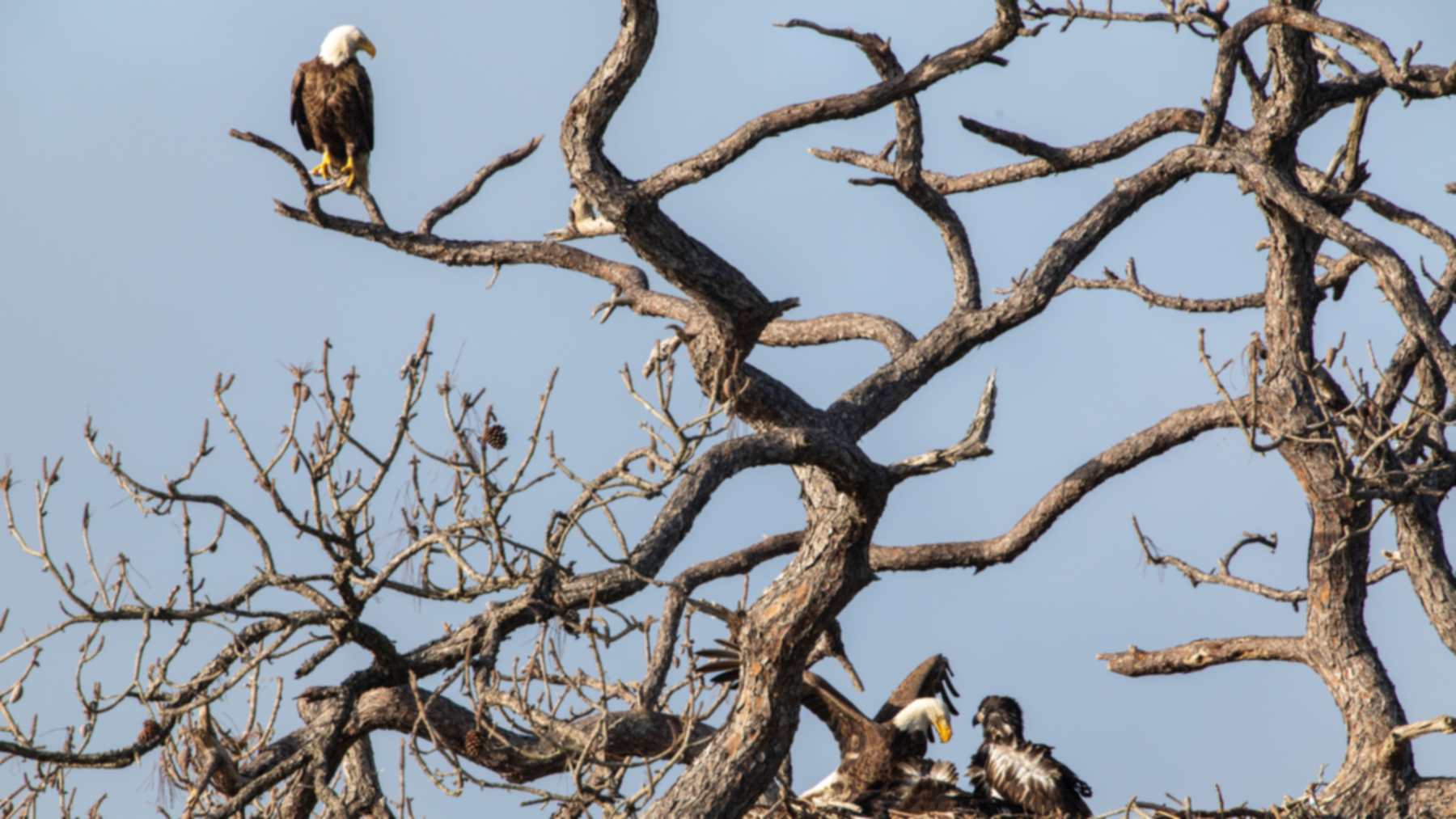
NASA counted 39 bald eagle territories at Kennedy Space Center, in Florida, in its 2023 census, more than triple what there was at the start of the 1990s. On March 19, 2026, the agency released a photo of a nest at the center with two eaglets, taken on March 13 by photographer Ben Smegelsky.
Of those 39 territories, 33 were active or potentially active. Nest censuses are conducted each year at Kennedy, at Merritt Island National Wildlife Refuge, and at Canaveral National Seashore, and the eagles breed each winter in the same spaceport from which rockets launch.
A refuge born with the spaceport
Everything began in 1962, when NASA bought the lands and waters near Cape Canaveral to build the center, though most of that area never really urbanized. On August 28, 1963, an agreement with the United States Fish and Wildlife Service turned those lands into Refuge number 286 of the national system, according to the refuge’s official entry on the federal Recreation.gov portal. Today it covers more than 140,000 acres, about 56,600 hectares, and provides habitat for more than 1,500 species of plants and animals.
In 1975 a second agreement created Canaveral National Seashore. According to the Fish and Wildlife Service, Kennedy’s lands and waters primarily serve the space program and, secondarily, as a refuge or park, with 15 species protected by federal law.
The Kennedy Parkway nest
In 2023, the center’s most famous pair nested near Kennedy Parkway, a couple of miles (about 3 kilometers) south of the Vehicle Assembly Building. Their original nest was built in 1973 and was used almost every year between 1975 and 2022, and thousands of employees and visitors knew it, many from tour buses.
Storms and pine bark beetles killed that tree around 2018, but the eagles continued using it until the wind toppled half the nest. By late 2022 the pair began bringing branches to another tree less than 100 yards away, around 90 meters.
Russell Lowers, a wildlife biologist with 32 years of experience at Kennedy, celebrated in a NASA feature from February 2023 that they had built it “closer to the road,” where people could observe more wildlife up close.
Lowers explained that eagles do not usually build less than a mile (1.6 kilometers) from another nest, so it’s logical to think the same pair returned. Since they typically live between 20 and 25 years, they can’t be the birds from the 1970s. In March 2023, NASA announced that a eaglet had hatched in the new nest.
Censuses from NASA’s helicopter
In 2023, Lowers and Resa Cancro, a senior GIS analyst, had spent nearly 20 years surveying this and other territories from NASA-piloted helicopters. On each flight they record whether the nest is occupied, how many eaglets survive, and whether they take to the air.
Record counts from the early 1990s did not reach a third of the 39 territories in 2023, i.e., fewer than 13. “These figures reflect the recovery of a population,” said Dave Breininger, chief scientist and wildlife biologist at the center.
Cancro, who has worked at the center since 1984, said she still brakes to look at them and, honestly, “it gives me goosebumps.”
Three nests on the ground after a storm
On March 24, 2013, a storm that lasted less than 30 minutes dumped rain, hail, and winds over 60 miles per hour (about 97 km/h) along Florida’s space coast. A couple of days later, Becky Bolt, a wildlife ecologist with InoMedic Health Applications, the company then providing environmental support to NASA, found three bald eagle nests toppled. In one, a eaglet stood upright, and another was found lying on the ground about 90 meters away.
With help from Merritt Island Refuge, the two fledglings were moved to the Maitland’s Falconry Center, and one returned two days later to an artificial nest placed near where it was found. Rescues like these recall other stories across the country, such as the biologist who in 1976 camped for weeks under an artificial nest to save the species or the Dollywood bald eagles whose sanctuary was damaged by another storm.
Lights out and controlled burns
On the beach, the problem is light. Between March and November, four species of sea turtles nest along Kennedy’s coast, and the center turns off shoreline lights from 21:00 to 06:00, according to a NASA report from May 2023. One of them is the loggerhead turtle, the same species that featured in the surprise nest on a beach in Alicante.
The second weekend of January 2026, NASA and the Fish and Wildlife Service deliberately burned about 2,600 acres (roughly 1,050 hectares) of scrub within Kennedy during an active countdown launch, for the first time at the center. The larger burn, about 1,400 acres (567 hectares), was conducted at Happy Creek, a key habitat for the Florida scrub jay, a protected bird that requires periodic fires.
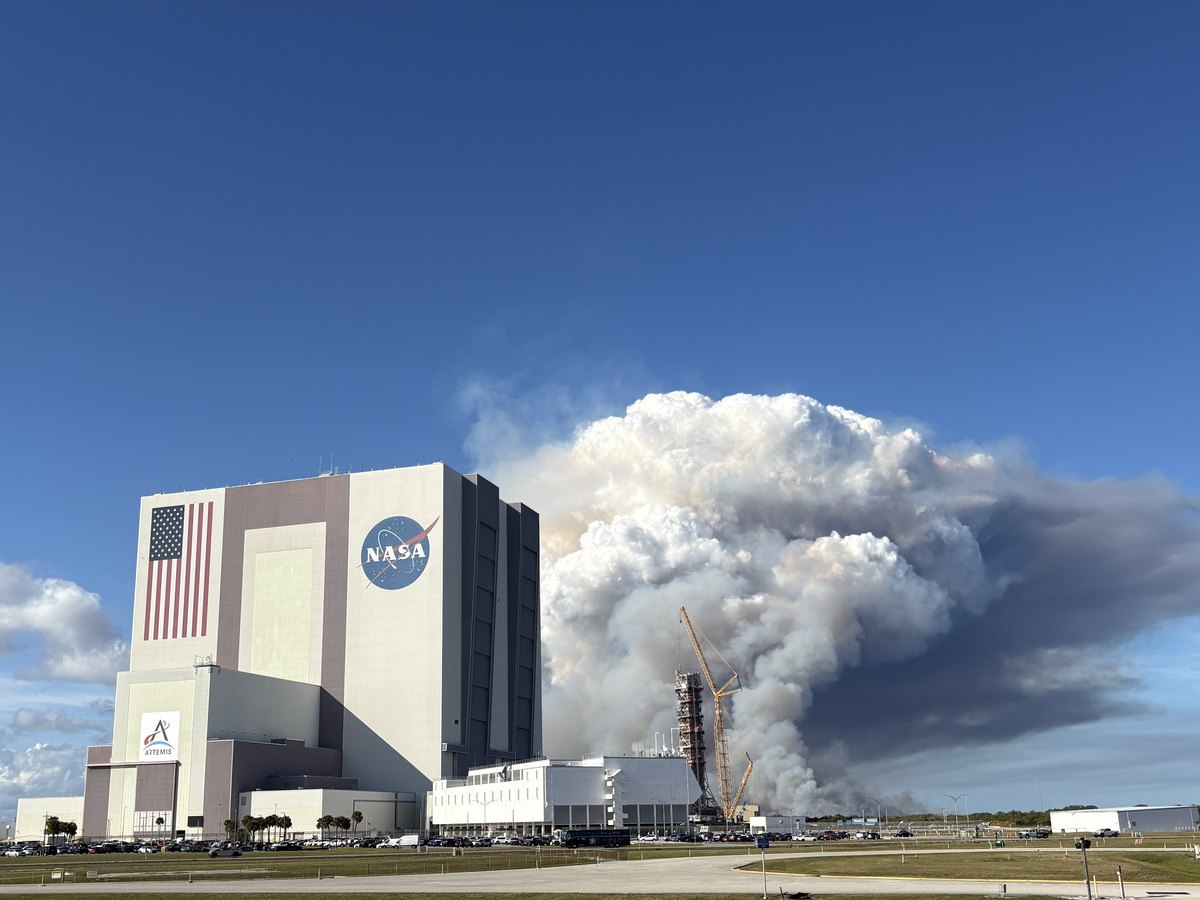
“As more launches take place at Kennedy, the need for sound land management in the refuge has never been greater,” said Greg Gaddis, senior operations manager for the spaceport. In 2025, Kennedy surpassed 100 successful launches in a year for the first time. In Spain, dry biomass is also removed to protect Doñana’s pine forests from pests and fires.
What the numbers don’t say
The 39 territories come from the 2023 census, which NASA presented as the latest. In 2013, Bolt handled another measure: she said at the time the center averaged about 14 or 15 bald eagle nests per year. A territory and a nest are not the same, so those two figures cannot be subtracted. The March 2026 photo arrived without a new count.
NASA released details of the burn on April 29, 2026 in an official note about controlled burns at the spaceport, and the photo of the bald eagles with their chicks on March 19, 2026.
Photo: NASA/Ben Smegelsky
