
A team of chemists at the University of Chile has managed to depolymerize nylon 6 at temperatures between 150 and 180 °C. To achieve this, they employ formic acid and alcohols such as n-butanol, according to an article published on July 6, 2026 in the Macromolecules journal.
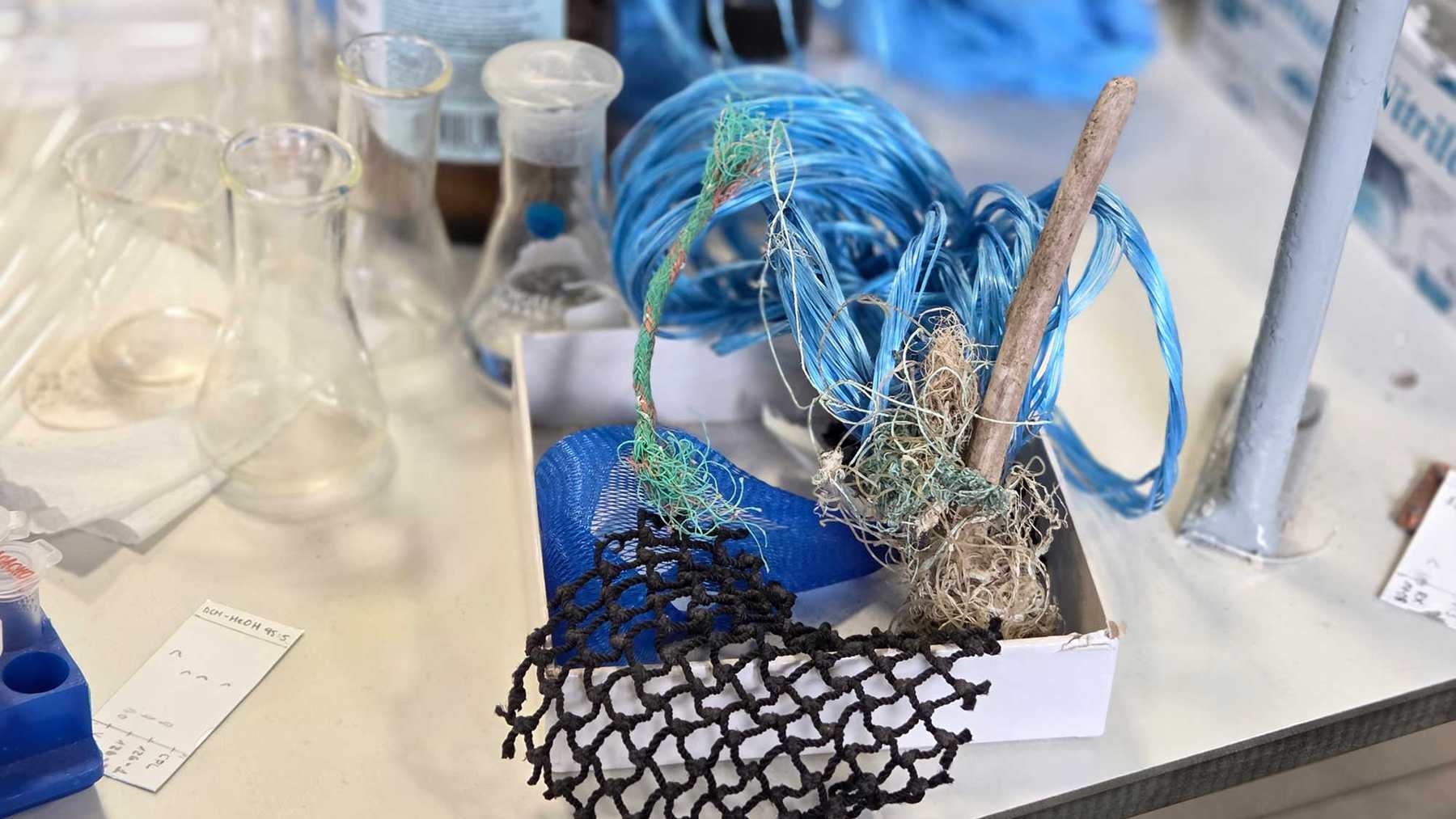
This plastic, also known as polyamide 6, has molecular chains so tough that they can endure years in a landfill. And the group is already looking beyond. They have also studied how to apply the process to fishing gear remains, a waste that poses a serious environmental challenge.
Formic Acid and N-Butanol
The technique is called depolymerization. It involves breaking the long chains of a polymer into shorter molecules, somewhat like dismantling a brick wall brick by brick to lift it or to build something else from the pieces.
In the study, signed by first author Marcelo Vilches-Herrera, the team notes that formic acid helps drive that cleavage at lower heat. However, what mainly emerges is not epsilon-caprolactam (the original building block of nylon), but compounds called N-substituted aminoesters that could have other uses.
«We were going to publish earlier, but at the same time researchers in China did it,» recalls Martín Santander. He is a fourth-year Environmental Chemistry student and is clear about it. His view is that it is much more sustainable because we use an acid derived from organic matter.
Two Years of Hood and Flask
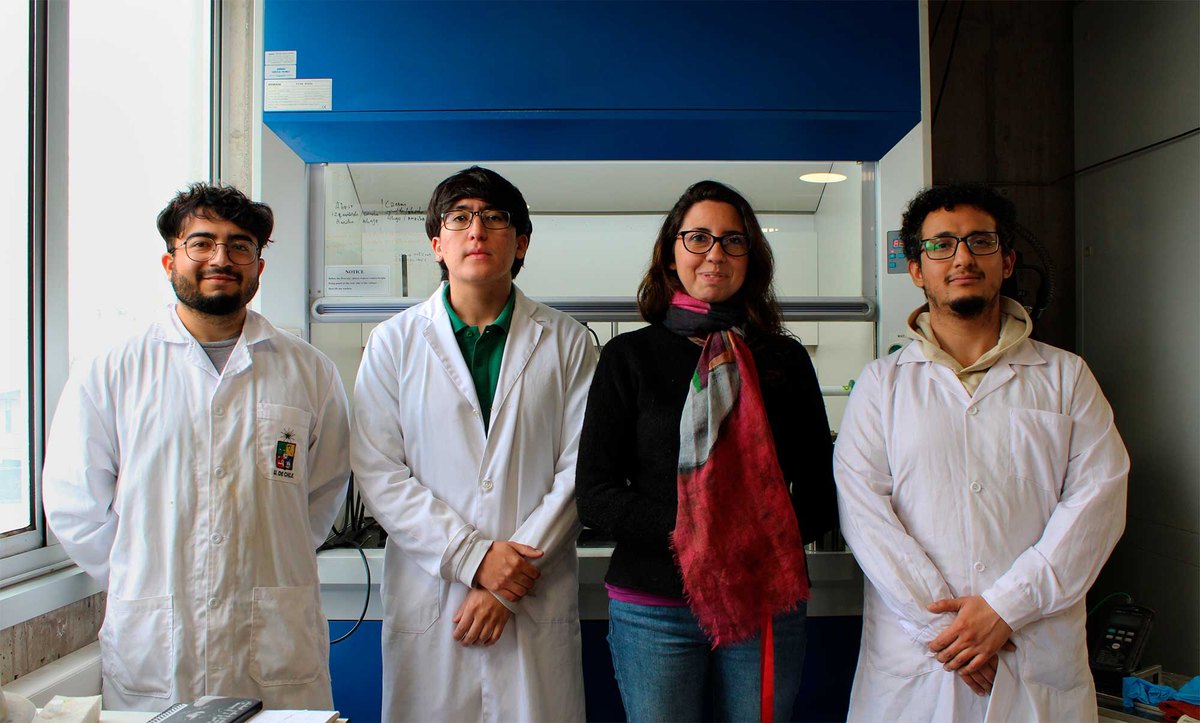
When chemistry PhD Matías Concha took charge of the project in 2024, during his graduate studies, he began the investigation. Over time, environmental chemists Yulissa Pino and Paula Briones joined. Martín, who had not yet finished his degree, joined later.
The four work with academic Susan Lühr on the Juan Gómez Millas campus in Santiago. They also received help from Sebastián Gallardo Fuentes, from Pontificia Universidad Católica de Valparaíso.
What value does recycling gain from this? For Lühr, the point is to recover substances that can be used to manufacture new materials. «Chemical recycling allows for a full cycle,» she summarizes.
Old Nets as the Next Test
The university itself describes fishing gear remnants as an environmental challenge. The possibility of applying the method to them inspires the team to test other waste streams.
In Chile, there are already people who make a living from this problem. The company Bureo recycles fishing nets to manufacture new products. The laboratory’s idea is different, because it breaks the material down until it reaches the molecule.
The process still needs to be adapted to different wastes and eventually scaled up. It is no small feat.
Chile Values Only 10.3%
In Chile, mechanical recycling rules. Plastic is collected, shredded, washed, melted, and remolded. According to the Asociación Gremial de Industriales del Plástico (Asipla), the country consumes about 1.3 million tons of plastic per year, and its recovery rate rose from 7.8% in 2022 to 10.3% in 2024.
The Extended Producer Responsibility law should push that figure. In packaging plastics, it requires 55% in the non-domestic category from 2031. For home use, the goal is 45% from 2034.
But melting plastic over and over can weaken it. Sometimes it ends up in worse products or mixed with virgin plastic derived from oil, although this is not universal (PET from bottles is already recycled bottle-to-bottle).
Price Slows the Leap
Magdalena Balcells, general manager of Asipla, points to cost. «What is done at the academic level is undoubtedly what will come in the future, but it communicates little with what happens in the real industrial world,» she warns. Lühr acknowledges that chemical recycling can be more expensive today, and that is why she seeks to reduce costs.
Matías Fuenzalida, for his part, seeks alternatives to glycolysis, one of the reactions used with PET. He wants faster processing, lower temperatures, and products easy to purify, as in other chemical recycling projects for aluminum and PET or enzymes trying to recycle PET.
Fuenzalida believes that companies invest little in science and that the burden almost always falls on universities. Lühr, for her part, does not want to wait. «There is little point in acting only when we are all polluted,» she says.
The study has been published in the Macromolecules journal, and the University of Chile explains it in its official note of October 30.
Photo: University of Chile
