
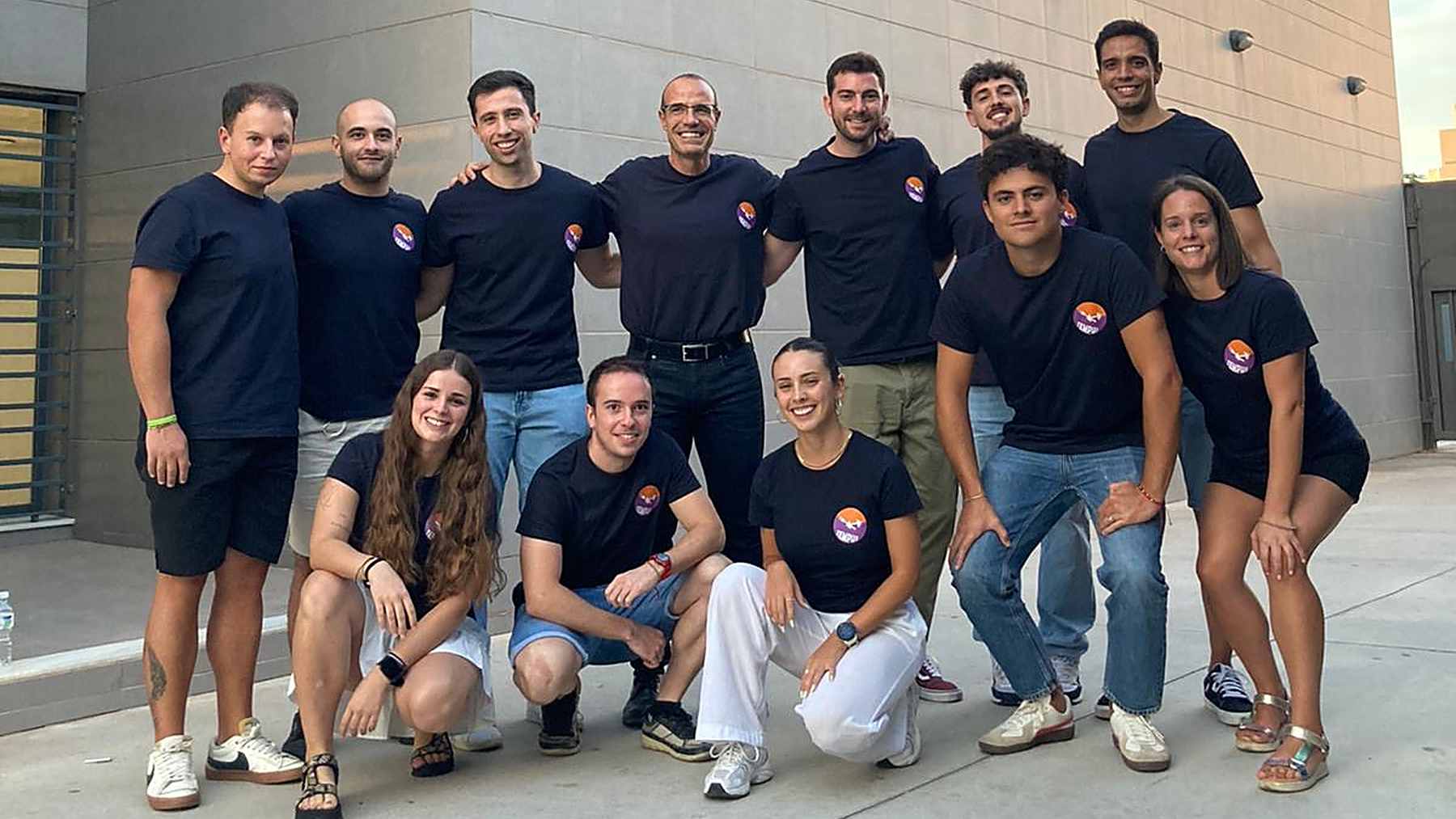
A team from Granada tested intermittent fasting combined with supervised exercise for 12 weeks in 187 adults with obesity. Those who fasted lost on average about 2.2 kilograms more than the group receiving usual advice. And those who additionally trained shed more body fat.
The trial, named TEMPUS, aimed at something else primarily. It wanted to know whether these routines emptied more fat from the liver, and there were no clear differences there. A year later, moreover, the weight advantage was no longer visible.
Four groups, eight hours
According to the University of Granada briefing, volunteers were randomly assigned to four groups. One followed usual care, another fasted, another exercised, and the last combined both. About half were women.
All received talks on the Mediterranean diet and physical activity. Those who fasted ate only within an eight-hour window per day, roughly like having a late breakfast and an early dinner. The supervised exercise mixed resistance training with high-intensity aerobic work.
Recruitment ran from May 2023 to April 2024. Those who measured the results did not know to which group each participant belonged. It is a detail that gives the study considerable robustness.
The liver, no winner
The main objective was liver fat, measured by magnetic resonance imaging. It dropped in all four groups. But no routine clearly outperformed usual care, nor did any one approach outperform another.
Put differently, the advice to follow a Mediterranean-style diet alone already moved the needle. And that is not a small thing. The scientific article summarizes this cautiously, because the data do not support a short-term greater reduction with any of the three options.
Pounds off and greater physical endurance
Where differences did appear was in weight. The two fasting groups, with or without training, lost more weight than the rest. We are talking about roughly 2.2 kilograms more on average compared to usual care.
The combination of fasting and exercise removed more body fat than usual care and than exercise alone. The two groups that trained, for their part, improved cardiorespiratory fitness. It is that bottom endurance you notice when climbing stairs without getting winded, and it serves as a health marker for the heart.
Antonio Clavero Jimeno is the co-primary author and a predoctoral researcher at the UGR. For him, these data allow looking “beyond weight.” They also help assess liver fat, total body fat, and physical fitness.
Men, women, and fatty liver
The team also looked at the response by sex. In men, combining fasting and exercise reduced liver fat more than usual care. In women, that difference did not appear.
Alba Camacho Cardeñosa, co-primary author and researcher at ibs.GRANADA, urges caution. She explains that these analyses “do not, on their own, allow concluding that the intervention works differently by sex.”
There is another striking finding. Among those who already had fatty liver at the start, around 30% of those who combined fasting and exercise no longer met the diagnostic criterion. With usual care, only 6.5%.
A year later, everything leveled
Twelve months after completing the program, the researchers re-measured the participants. There were no differences in liver fat between groups. The weight and body composition advantages from the 12 weeks had also faded.
Anyone who has tried a diet knows what this is about. The hard part is not usually losing weight but keeping it off. That is why the team proposes trying longer programs, especially for people with significant fatty liver.
They also call for strategies to help sustain what has been achieved. At ecoticias.com we have already noted that intermittent fasting is not more effective for weight loss than traditional dieting. This trial follows a similar line.
Hospitals and CIBER behind it
The study was led by the PROFITH group of the Mixed Institute for Sports and Health (iMUDS) at the University of Granada. They collaborated with ibs.GRANADA and the Clinico San Cecilio and Virgen de las Nieves hospitals. It also involved two CIBER networks, the Obesity network and the Fragility and Healthy Aging network.
What can be taken away for someone with obesity? Eating within an eight-hour window may help shed a bit more weight, and being active improves fitness. But neither approach performed miracles for the liver in three months.
A large international study points to obesity in Spain stabilizing. And another study found that the Mediterranean diet with exercise reduced childhood obesity in girls. The study was published in Nature Communications on October 14, 2026.
Foto: Universidad de Granada
