
The ocean removed an average of 2.8 billion tonnes of carbon from the atmosphere each year between 1990 and 2019. It accounts for 35% of our fossil-fuel emissions, while the other major carbon sink, the land, has not grown. Science published this on November 12.
They are the Scripps Institution of Oceanography (California), the University of Exeter, and the Max Planck Institute for Biogeochemistry. Their signal has been atmospheric oxygen, measured for more than 30 years. And it reveals a land surface far less reliable than many climate models suppose.
The Oxygen Trail
Burning coal, gas, or oil releases CO2, but it also consumes oxygen. Plants do the opposite, because through photosynthesis they take in CO2 and release oxygen. In the ocean, according to the Scripps note, CO2 mainly enters through chemical reactions that do not touch oxygen.
That difference is enough. By tracking the CO2 curve and the oxygen curve at the same time, one can separate what went to the ocean from what went to the land. Neither sink can be measured directly, hence the value of the method.
Traces from the Arctic to the South Pole
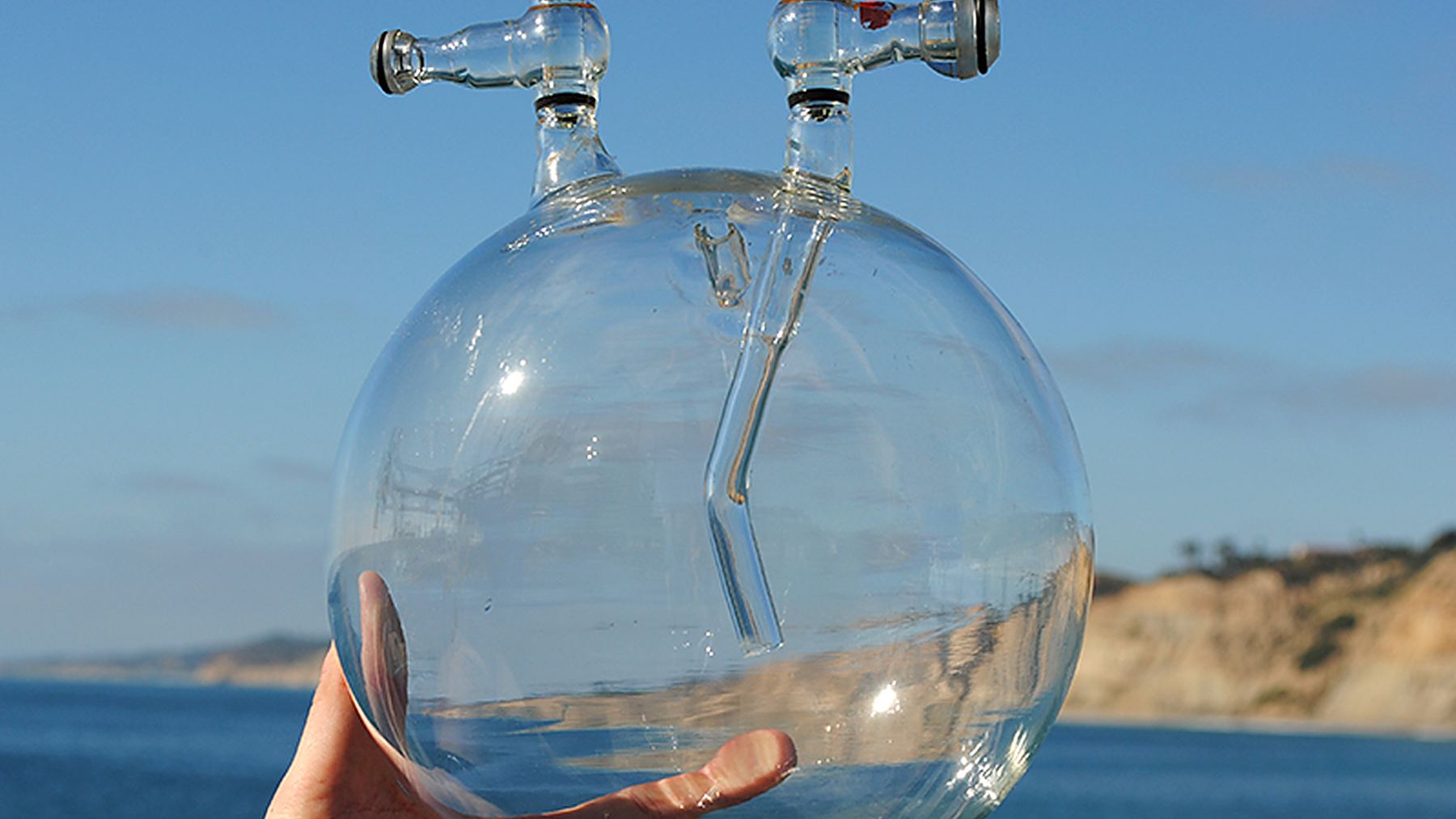
The data come from the O2 Program at Scripps, which the geochemist Ralph Keeling founded in 1989. Today it collects air at 10 sites in the Pacific, from the Arctic to the South Pole. The samples are analyzed later in Scripps’ laboratory.
In a sense, it is the little brother of the famous Keeling curve. That CO2 record was started by Charles David Keeling at Mauna Loa (Hawaii) in 1958. Measuring oxygen with such precision, though, is no stroll.
“Measuring atmospheric oxygen with the parts-per-million precision that this work demands is incredibly difficult,” acknowledges Andrew Watson, of Exeter. He notes in the university’s briefing that these measurements provide a unique understanding of the Earth system.
An Ocean That Swallows More
The ocean sink is not only the largest of the two. It has also risen by about 630 million tonnes of carbon per year per decade. “Without land and ocean absorbing half of the CO2 from fossil fuels, we would be living on a very different planet,” sums up Eric Morgan, the lead author.
Thanks to that, the CO2 in the air has risen more slowly and the warming has been smaller. Yet the concentration marks a record 53% above preindustrial levels. And that benefit comes at a cost, because that CO2 lowers the pH of seawater and ocean acidification has already crossed its red line.
There is another striking detail. The ocean has reinforced its role more than current simulations reflect. In other words, the carbon cycle remains not fully understood.
The Land Mass Falls Behind
Forests, soils, and other terrestrial ecosystems removed around 1,000 million tonnes of carbon per year. It is about 13% of fossil-fuel emissions, with large fluctuations from decade to decade. Its best moment came in the decade centered around 2009 and since then, generally, it has tended downward.
That clashes with many models, which expect more plant growth thanks to CO2 and nitrogen. To balance the books, deforestation would have to emit much more, and estimates suggest it emits less. In Europe, by the way, it has already been observed that forests do not absorb as much carbon as they should.
“It was very surprising to see that the terrestrial sink has not kept pace with the rise in CO2,” Morgan admits. In his view, the data indicate that it may be “quite fragile.”
How Long Will the Ocean Endure?
That the sea has responded well up to 2019 does not guarantee anything for the coming decades. Warmer water holds less CO2 and mixes less well with deeper layers, where carbon is stored for hundreds of years. We already noted in October that the ocean is losing capacity to absorb CO2.
Nor is it clear why the land has slowed. Nor how much the models misestimate the reductions in emissions that are needed. And without these measurements, how would we even know that something has changed?
That is why the authors call for stable funding to continue taking measurements. “Maintaining this type of measurement year after year is not easy, but the benefit for improving our understanding of the carbon cycle is enormous,” insists Ralph Keeling. The study has been published in Science.
Photo: Eric Morgan/Scripps Institution of Oceanography
