
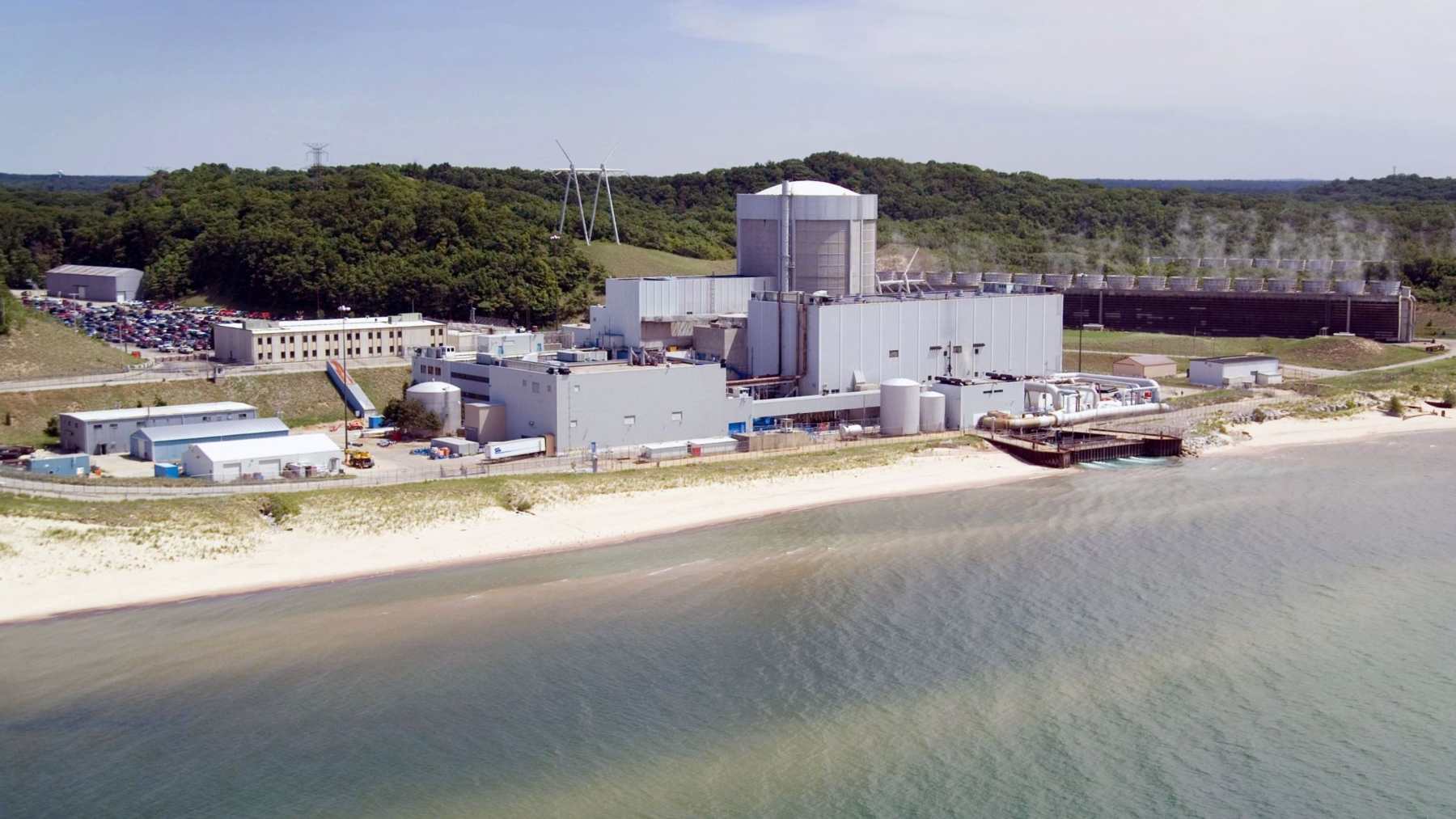
The Palisades nuclear power plant, situated on the shores of Lake Michigan, has taken a significant step toward resuming electricity generation. Holtec International announced that on August 30, 2026, the fuel-loading process at the reactor began, after more than four years of shutdown.
The project aims to spearhead the first restart of a U.S. commercial nuclear plant that had entered decommissioning. But loading the reactor does not yet mean supplying power to the grid, a distinction crucial to understanding what this announcement actually entails.
More than half a century of history
Palisades began commercial operation in 1971 and ceased functioning on May 20, 2022. At the time of its closure, it had accumulated more than fifty years of service, as confirmed then by Entergy, its former owner.
The shutdown coincided with the end of a power purchase agreement and Entergy’s strategy of exiting generation destined for the wholesale market. Holtec acquired the facility in June 2022 to dismantle it, though later it pushed for its revival.
What goes into the reactor
The core is designed to house 204 fuel assemblies, blending fresh fuel with partially used material from prior cycles. Holtec links this arrangement to an electrical output of 805 megawatts, the capacity projected for the installation.
The loading places the plant in the so-called “Mode 6,” a phase defined in its technical specifications. “Fuel loading at the Palisades reactor is a major milestone,” stated Fadi Diya, Holtec’s chief nuclear officer.
Repairs for the return
Preparations have included inspections of the reactor vessel, work on the steam generator tubes, and cleaning of their circuits. Components have also been refurbished and equipment reviewed to ensure they will respond during future operation.
In July 2026, Holtec announced that it had completed the major rehabilitation projects, including the installation and testing of a new fuel-handling machine. At that time, more than 5,000 individual maintenance, inspection, and readiness tasks remained.
The work has also encompassed training and retraining of the operators. Restoring a facility of this kind requires preparing both the machinery and the people who will operate them daily.
Who is financing the reopening
The United States Department of Energy closed a $1.52 billion loan in September 2024 to support Palisades’ revival. Michigan, for its part, pledged $300 million for actions such as infrastructure improvements, fuel, and training.
In addition to that backing, there are long-term power purchase agreements with Wolverine Power Cooperative and Hoosier Energy. In practice, these contracts provide buyers for the forthcoming production, a key piece in sustaining the project economically.
The Department of Energy estimates that the initiative will maintain or support around 600 permanent jobs. It also anticipates more than 1,000 jobs during periodic refueling outages and maintenance, so the impact extends to the local economy.
The environmental balance
Why revive this plant? One argument is to provide stable generation by leveraging existing infrastructure. The Michigan government estimated in 2024 that the restart could avoid 4.47 million tonnes of CO₂ annually, a projection that should not be mistaken for an actual reduction achieved.
The U.S. Energy Information Administration explains that reactors do not emit CO₂ during operation. However, extracting and processing uranium, manufacturing fuel, and constructing the facilities require energy and generate associated emissions.
Radioactive waste also remains, requiring storage and specific controls. It is a responsibility that continues long after the electricity reaches households.
The lake also plays a role
The environmental assessment for the restart examined Lake Michigan’s water intakes, potential effects on fish, and historical groundwater data. According to the national laboratory PNNL on September 3, 2026, regulators concluded that the restart would not produce significant environmental impacts.
That finding belongs to the environmental review, while the safety of design and operation is studied separately. PNNL itself emphasizes this distinction, relevant for a facility that must demonstrate it is prepared to resume operation.
The steps ahead
The Nuclear Regulatory Commission’s daily report on September 16, 2026 placed Palisades at 0% power. The figure helps put the announcement into perspective, because loading must be followed by testing, inspections, and start-up activities.
Holtec did not specify a concrete date for the commercial return in its announcement. The official release about the start of fuel loading was published on August 30, 2026 by Holtec International.
Image: Entergy