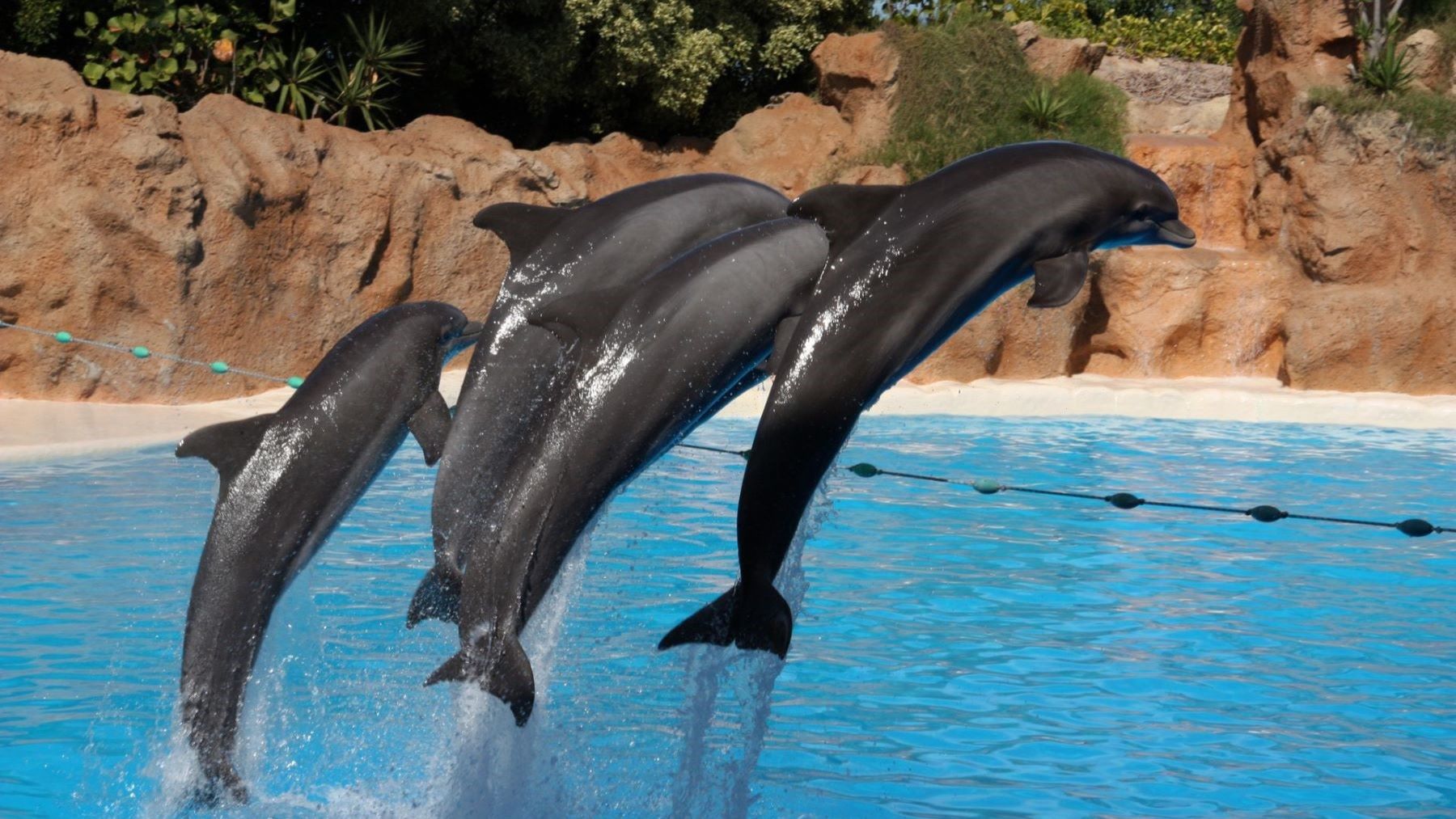
The Franz Weber Foundation calls for a ban on dolphin and sea lion performances at Palmitos Park in Maspalomas, and advocates for a national reform of cetacean shows.
The Franz Weber Foundation has once again questioned Spain’s handling of cetacean shows conducted in the country’s conservation centers, such as Palmitos Park. Law 7/2023 restricts the breeding and maintenance of cetaceans, such as orcas or dolphins, in captivity to research and conservation purposes, but allows their use in shows under the supervision of caretakers and specialized professionals, something the foundation deems unacceptable and a greater negligence. There is no educational value in torturing animals for people to laugh.
Palmitos Park
The Franz Weber Foundation has filed this Thursday a demand for the prohibition of dolphin and sea lion shows at the Palmitos Park, in Maspalomas, as an example of what should not be done in a facility supposedly dedicated to “conserving” wildlife in captivity.
In a statement, this animal–protection NGO argues that Europe is moving toward ending these performances, and therefore calls for a national law in Spain addressing their use in venues like Palmitos Park, where it considers that the “educational” shows are a form of objectifying cetaceans.
The Foundation notes that these animals are reduced to mere objects of entertainment and the daily routine they perform does not contribute at all to their conservation, much less to public education.
It also emphasizes that Spain holds the sad leadership of open dolphinariums across the European Union, contributing to a model of captivity driven by simple business.
According to estimates in recent years, in these water enclosures in Spain there would be about a hundred dolphins and half a dozen orcas, forced to perform jumps and tricks that have nothing to do with their natural behavior.
The Franz Weber Foundation considers that Law 7/2023 on Animal Protection “emptied of content” any proposal to reconvert zoos and aquariums, defending the continuity of these facilities without a real interest in the conservation of ecosystems and their inhabitants.
The current legislation, the note adds, endorses public cetacean shows, such as dolphins, whose scientific or educational interest is deemed “null,” while it prohibits the use of other wild species in captivity in circuses, an inconsistency it regards as an evident contradiction.
It also highlights that scientific studies demonstrate how captivity affects the organic health of cetaceans.
“Captivity negatively impacts the brain function of these animals, with characteristics such as the large size of their bodies and brains, highly social behavior, sophisticated cognition, long life expectancy, and wide territorial ranges,” states the release.
For this organization, captivity involves small facilities, a lack or reduction of exercise, and limited social interactions with individuals of the same species, hindering the development of normal socialization, care, foraging, or the ability to travel long distances.