
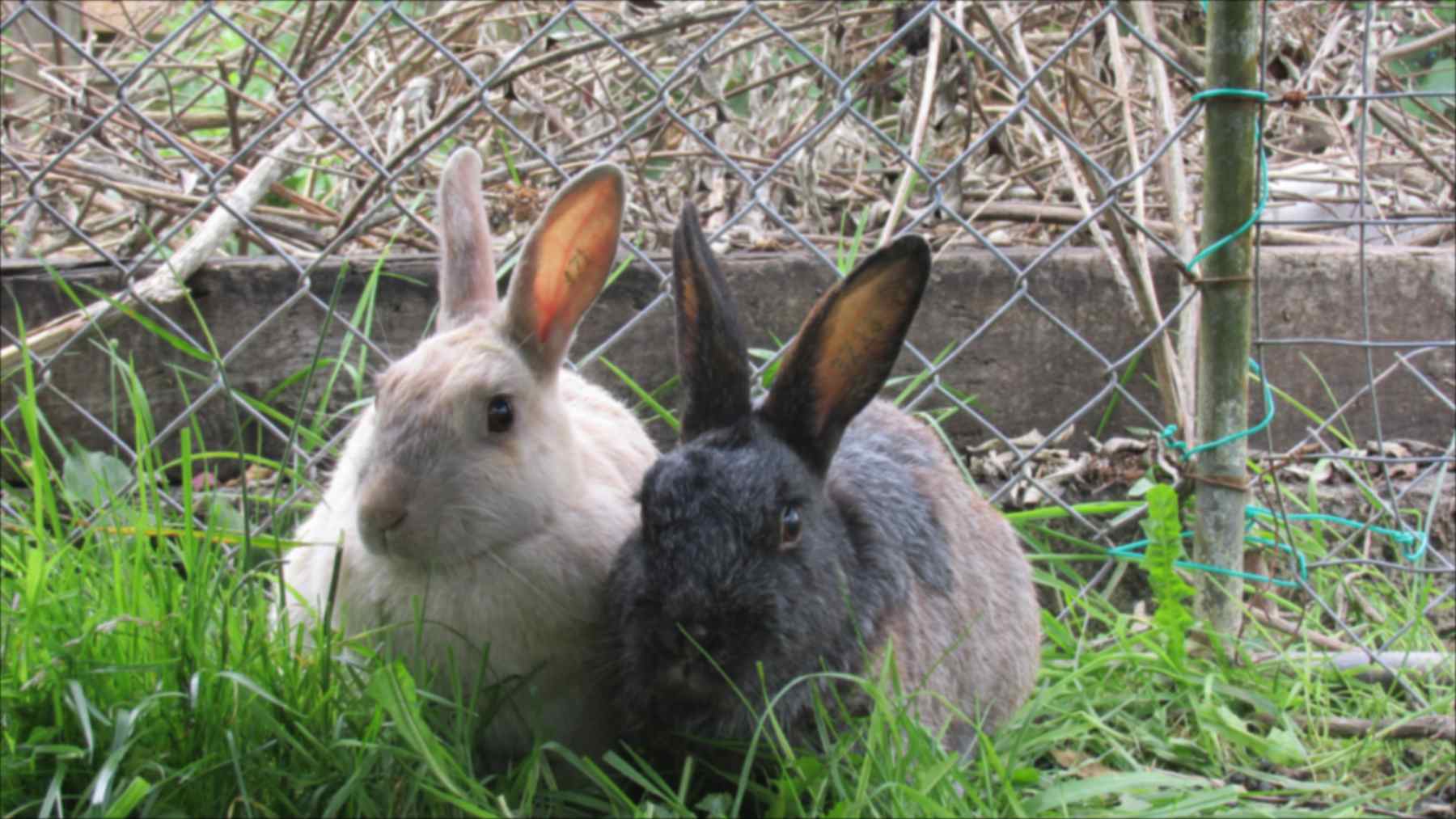
In October 1865, rabbits introduced from Australia arrived on Enderby Island, part of the subantarctic Auckland Islands, to serve as a food supply for potential castaways. Nearly 127 years later, their descendants formed a differentiated population that would be rescued before its eradication from the island.
The story encloses a paradox of conservation. Those animals held value as a breed, yet their presence harmed the native ecosystem. The solution was to keep a breeding group off Enderby and eradicate the island population, a decision that allowed separating the protection of the rabbits from the recovery of their old refuge.
A Pantry for Shipwreck Survivors
Today it may seem strange to release animals on a remote island to aid people who may never arrive. In the 19th century, shipwrecks around the Auckland Islands led to leaving provisions, releasing livestock, and organizing searches for survivors. The rabbits were part of that response to a real danger.
Enderby covers about 700 hectares north of the archipelago’s main island. There, amid cold, damp, and wind, the rabbit population managed to reproduce for generations. Its isolation lasted until the rescue in September 1992, while the remaining animals were eliminated the following year.
What Made Them Special
Enderby rabbits typically weigh around two kilograms and have a silvery-gray coat, with a blue slate-dark underbelly. The head, ears, and tail are darker, sometimes black. Cream- or beige-colored individuals also appear.
The New Zealand encyclopedia Te Ara locates their probable origin in British silver rabbits. During isolation, a breed with distinctive characteristics consolidated, though the animals still belong to the European rabbit species (Oryctolagus cuniculus). This nuance helps explain their uniqueness without implying the birth of a new species.
The Cost to the Island
The problem extended beyond the number of animals. Rabbits consumed native vegetation and excavated burrows across a landscape of high value for wildlife. A 1991 assessment estimated Enderby harbored between 5,000 and 6,000 individuals.
The burrows also posed a risk to the pups of New Zealand fur seals. The operation report, published by Nick Torr in 2002, describes how some pups became trapped and died in those holes around Sandy Bay, a breeding area. A small animal could cause problems that affected much larger neighbors.
The 1992 Rescue
How could those rabbits be conserved without continuing to harm the island? The New Zealand Society for the Conservation of Rare Breeds organized an expedition with the Department of Conservation. In September 1992, 50 animals were captured and 49 were transported alive to New Zealand, according to a review published in Notornis in 2020.
The rabbits underwent quarantine on Somes Island, in Wellington Harbour. They were then distributed into breeding groups among volunteer caretakers, with the aim of preserving that variety. Their continuity depended on breeding under human care.
The eradication was carried out in 1993 using poisoned baits and the search for surviving individuals. The checks carried out in 1994 found no rabbits on Enderby or on the nearby Rose Island. The earlier rescue had allowed keeping the Enderby breed away from its home island.
The Recovery of the Ecosystem
After removing the introduced mammals, the vegetation could recover from the pressure it had endured. Torr’s work describes an expansion of large native herbaceous plants that had previously been relegated to cliff areas. The change also reduced the problem of fur seal pups becoming trapped in burrows.
It is important to distinguish the effects of each action. A 2022 study on the removal of cattle noted a significant ecological response, but warned that it could not be completely disentangled from the removal of rabbits and mice. The recovery was the result of several interventions.
A Breed Still Vulnerable
The rescue did not guarantee the rabbits’ future. The conservation list of the Rare Breeds Conservation Society, based on its 2023 and 2024 census, classifies Enderby’s rabbits as “critical.” For rabbits, that category corresponds to between 1 and 30 breeding females in New Zealand.
The figure refers to breeding females in that country, not the total number of individuals worldwide. It is also a classification specific to the society’s keepers of domestic breeds. It helps explain why preserving a few animals is not enough to ensure their long-term survival.
The rescue history was revisited in 2022 in the New Zealand Journal of Ecology. The most recent assessment cited here on the breed’s conservation is published in the New Zealand Rare Breeds Society’s tracking list.
Image: André Richard Chalmers / Wikimedia Commons (CC BY-SA 4.0)