
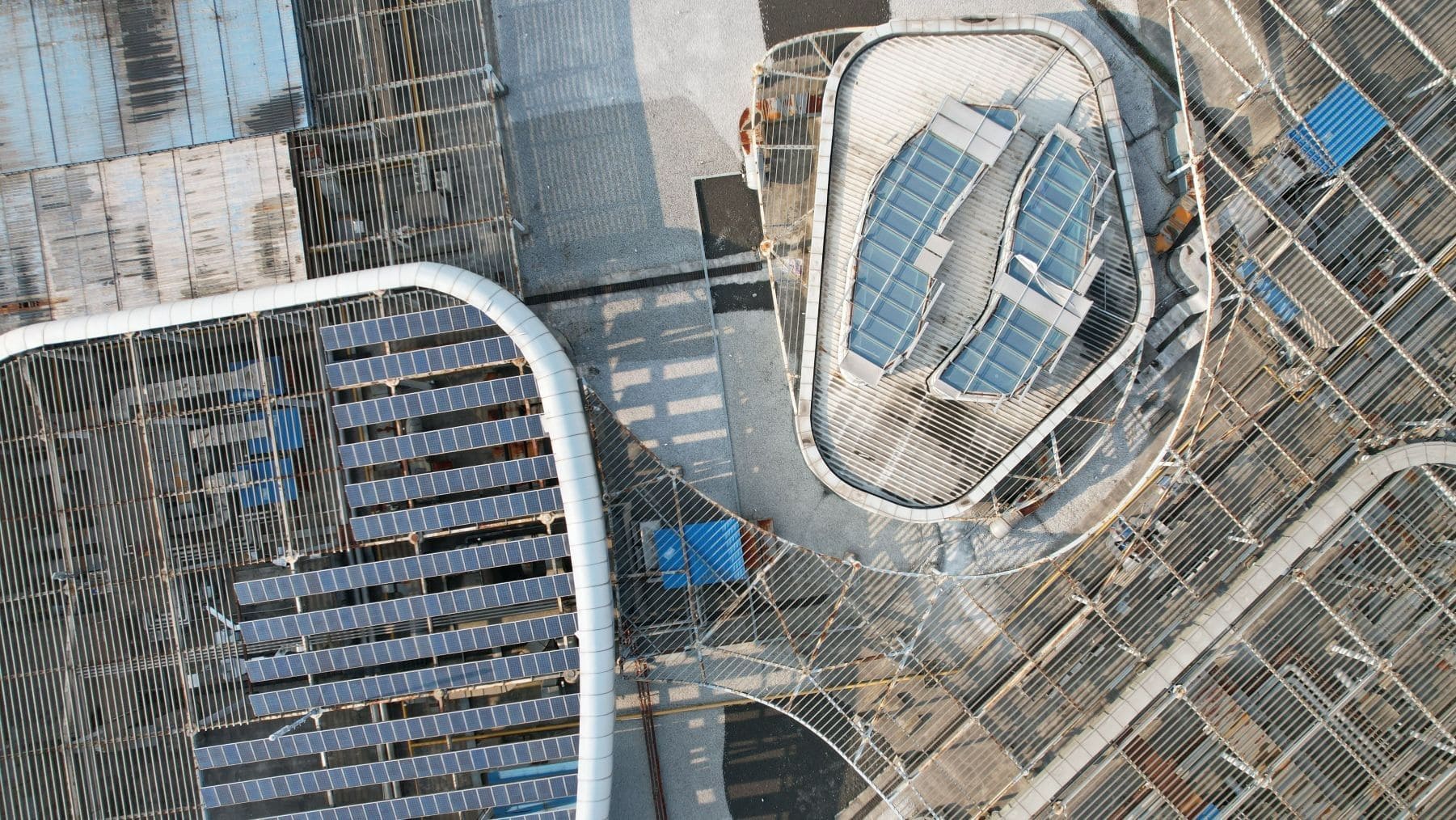
Renewables are speeding up their global expansion for energy security, but grids and storage are testing governments: deploying capacity without readying the system limits the benefits.
The value of renewables and their current situation
Renewables are accelerating their global expansion as concerns about oil supply insecurity once again highlight the cost of relying on fossil fuels. The IEA forecasts almost 4,800 gigawatts of new capacity between 2026 and 2031, 57% more than in the previous six-year period.
The advance has a strategic consequence: producing electricity from domestic resources helps reduce exposure to imports and to geopolitical shocks. Clean energies gain ground as a security tool.
But success requires decisions that accompany the deployment. Grids, batteries and electrification will determine how much of that expansion becomes real, usable supply, lowering dependence and delivering benefits for consumers and businesses.
Renewables accelerate their global expansion: energy security changes priorities
For the first time, emerging and developing economies, excluding China, will together match the new additions of renewables from advanced economies during the period analyzed. India will be the second major growth market, behind the Asian giant.
The expansion broadens its lineup of players. Southeast Asia, Africa and the Middle East gain weight and photovoltaics remains the technology leader. Renewables stop relying on a small number of large markets to drive their growth.
The forecast, however, carries a caveat: reaching around 9,710 GW by 2030 would multiply capacity by 2.6 compared with 2022. The commitment to triple it would remain outstanding until roughly 2032. Growing strongly does not automatically fulfill what was promised.
China slows down and reminds that policies can also stall the transition
Renewables accelerate their expansion globally in the medium term, but in 2026 there would be an 11% drop in new additions, to a maximum of 733 GW. This would interrupt a 21-year streak of annual records.
The main brake is China, where the installation of new photovoltaic facilities fell by more than 55% during the first nine months of the current year, coinciding with the shift from fixed tariffs to competitive auctions.
Industrial pressure adds another difficulty; in fact, the report shows that more than 90% of Chinese solar component manufacturers are reporting losses. The competitiveness of the technology does not eliminate the need for predictable regulatory frameworks and companies capable of sustaining investment.
Spain needs to harness its clean electricity, not turn it into a problem
The Spanish case shows the following challenge: accompanying the rapid solar expansion with storage, interconnections and flexible consumption. Negative wholesale prices reflect mismatches between supply and demand, as well as technical and commercial constraints.
Those prices do not mean that all households get electricity for free. The wholesale market price and the final bill are very different concepts. The response should enable industry, transport and buildings to take advantage of periods of abundant production.
Renewables are accelerating their global expansion, and it is up to governments, regulators and operators to prepare the system to integrate them. The IEA acknowledges some Spanish progress, but calls for speeding up electrification and modernizing the grids.
Economic value can already be measured: according to the IEA’s review of Spain, the expansion of wind and solar avoided roughly $26,000 million in accumulated gas imports between 2011 and 2024.
Without the renewable additions of that period, gas imports in 2024 would have been almost 40% higher. Slowing the transition also has a price: maintaining a dependency that consumes resources and exposes the country to prices it cannot control.
