
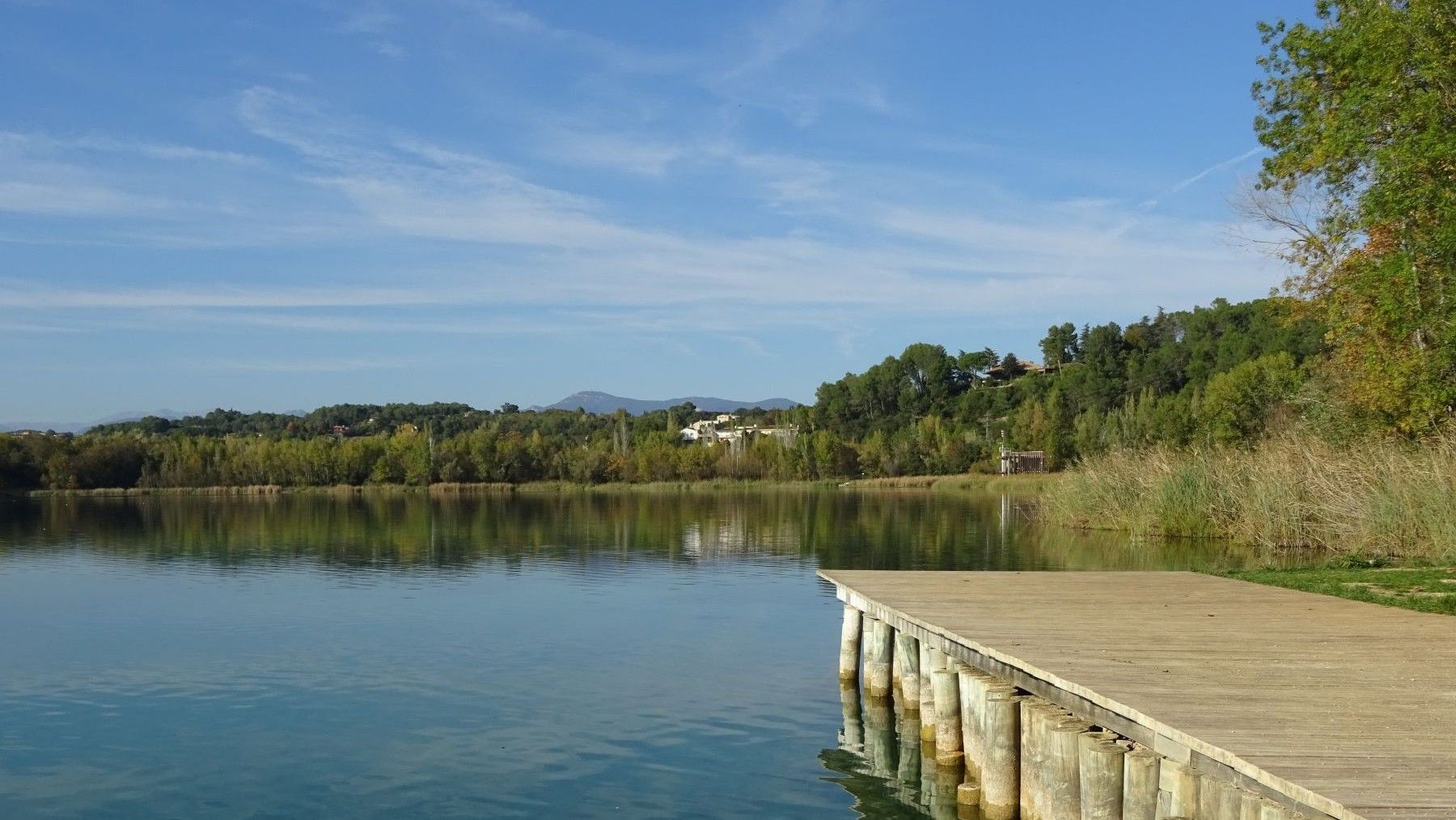
A survey conducted by the Universities of Barcelona and Poznan reinforces Lake Banyoles’ appeal as a site for studying carophytes, the algae that form submerged meadows, help stabilize sediments and provide shelter to numerous aquatic organisms.
Lake Banyoles keeps beneath its surface extensive meadows that help maintain the water’s clarity. A recent scientific survey detected 6 species of carophytes, algae whose presence fosters substrate stability and offers food and refuge to other organisms. The finding places the lake as a site of particular interest for researching its biodiversity.
Experts from the Universities of Barcelona and Poznan, in Poland, took part in the field day, framed within the project IBERCAFO. The initial results indicate that the species are distributed according to depth and other environmental factors. These meadows reduce the resuspension of sediments and may limit the growth of phytoplankton by capturing nutrients such as phosphorus.
Its scientific value also reaches back into the past of Lake Banyoles. The researchers study the girogonites, calcified reproductive structures capable of preserving themselves in sediments and providing information about ancient plant communities. Knowing which species live today in the Lake Banyoles and how they are distributed allows the interpretation of those remains and an understanding of the environmental changes the ecosystem has undergone.
Discovering the Secrets of Lake Banyoles
Lake Banyoles is emerging as a hotspot for carophytes after six species of these algae were detected, according to the consortium that manages it following a scientific survey carried out by specialists in aquatic plants, limnology and paleobotany.
The universities of Barcelona and Poznan (Poland) participated in October in this field day and, now, the detection of these six species – Nitella hyalina, Chara vulgaris, Chara contraria, Chara globularis, Chara hispida and Chara aculeolata – distributed, according to the initial results, based on depth and other environmental factors. The Lake Banyoles shows notable potential for the development of future ecological studies and conservation projects.
Carophyte algae form submerged meadows on the lakebed that play a significant role in its ecological functioning, since their presence stabilizes sediments and reduces particle resuspension, which favors water transparency. They can also limit phytoplankton development by capturing nutrients, especially phosphorus, and by competing for available resources.
Through photosynthesis, these algae assimilate dissolved inorganic carbon and incorporate it into their biomass and the meadows they form provide food, habitat and shelter to numerous aquatic organisms, contributing to maintaining biodiversity.
This recent survey at the Lake Banyoles has highlighted the scientific interest in girogonites, the calcified fruiting bodies of carophytes, since their study yields information about past plant communities and changes in environmental conditions over time.
The workday is part of the IBERCAFO project, funded by the Spanish Research Agency, and its preliminary results reinforce the importance of studying these algae for their contribution to biodiversity, their role in maintaining water quality and in interpreting the ecosystem’s ecological history.
Submerged Meadows and Water Basins
The setting where these algae grow, Lake Banyoles, also hides a singular feature: the lakebed is organized into six large basins and hosts up to 13 main points of groundwater inflow, according to the Museu Darder.
These inputs total between 400 and 600 liters per second. Studying submerged meadows in this environment helps connect the visible biodiversity with the functioning of a lake that is also fed from the subsurface, a fundamental dimension for understanding and conserving the entire ecosystem.
