
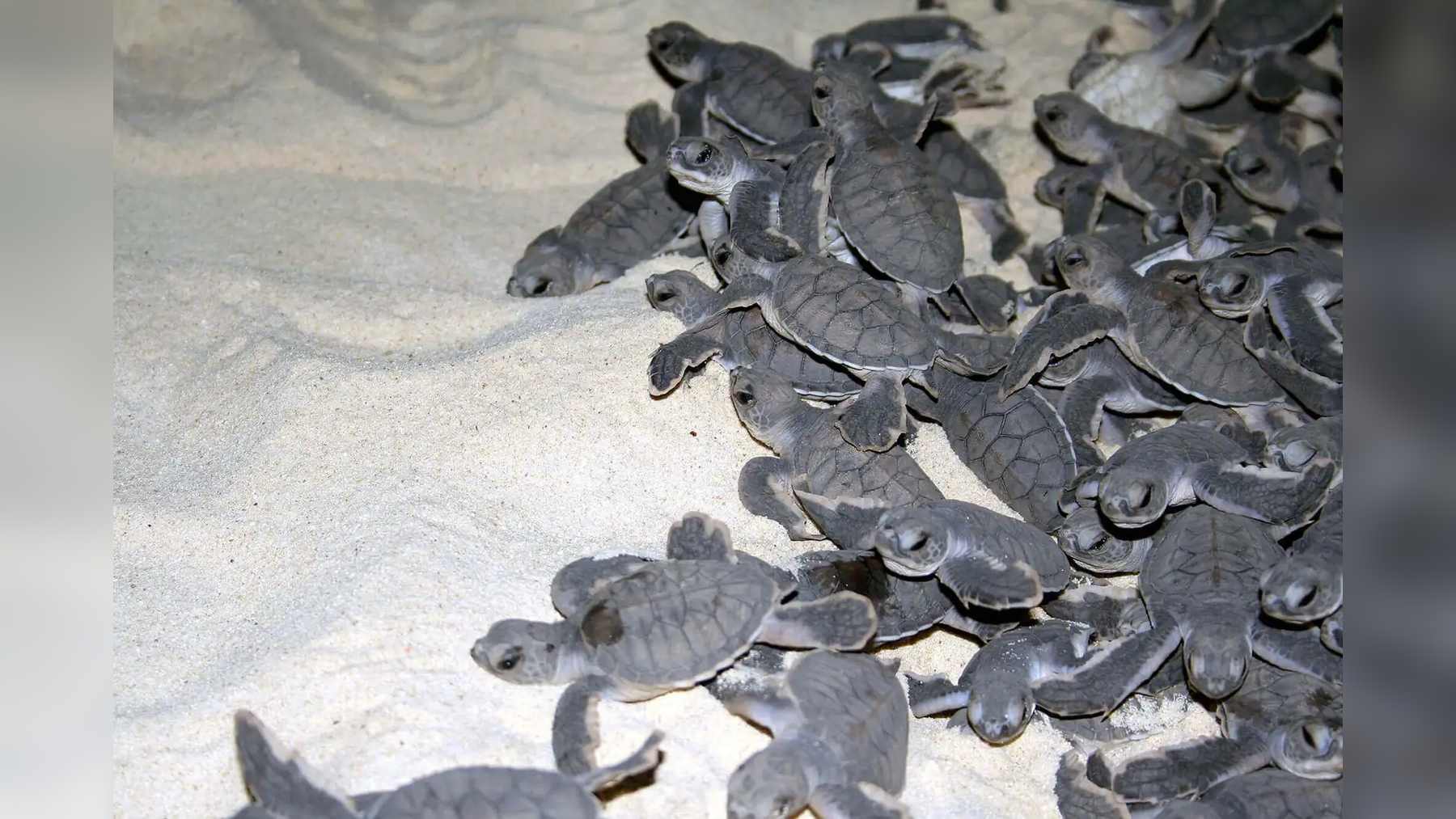
Sabah Parks administers Turtle Islands Park, located in the northern part of Borneo, and cools the sand where green turtle eggs incubate with shade. A study published on June 12, 2026 measured 113 nests within the park. The shade lowered the sand temperature by an average of 2.1 °C.
According to the study itself, the measure comes with a cost, because during the wet season shaded nests had a 22.7% lower hatching success. The authors also warn that the projected warming could overwhelm this technique.
The work arrives months after the IUCN upgraded the green turtle from “Endangered” to “Least Concern” in October 2025.
Three Islands Off Sandakan
The Turtle Islands Park lies about 40 kilometers north of Sandakan, in the Malaysian state of Sabah, and comprises Selingan, Bakungan Kecil, and Gulisan. With the surrounding reefs and sea, it covers 1,740 hectares, and green turtles (Chelonia mydas) and hawksbill turtles nest there year-round.
In 1996, Malaysia and the Philippines linked these islands, which had been protected as a marine park since 1977, with six other Philippine sites. Thus the first cross‑border marine protected area for turtles was established, according to Sabah Parks.
Paul Basintal, then deputy director of Sabah Parks, counted 5,832 green turtle nests in 1998 and 11,361 in 1999. By August 2026, a study from Universiti Malaysia Sarawak already reported as many as 15,000 nests per year on the islands.
Plates and 75-Centimeter Holes
Rangers unearth the freshly laid eggs and immediately transport them to nurseries on the three islands. There they bury them by hand in 75-centimeter holes surrounded by mesh, somewhat akin to green turtle egg rescue in the Galápagos. Each clutch, containing 50 to 80 eggs, is marked with a plate showing a number and date, and the hatchlings emerge after 50 to 60 days, almost always at night.
According to Sabah Parks, sand temperature determines the sex, and warmer sand yields more females. The park estimates a difference of about 2.5 °C between a nest that yields only females and one that yields only males, hence the shading in part of the nurseries.
The Colombo and Joseph Team
The study was authored by Giorgia Colombo and Juanita Joseph of the Borneo Marine Institute at Universiti Malaysia Sabah, together with Hideaki Nishizawa of Kyoto University and two Sabah Parks specialists. The team followed 113 nests between August 2023 and January 2024, measuring how long each took to hatch and how many eggs produced offspring.
For temperature data, they used sensors buried in the sand from 2019 to 2023. With shade, incubation lasted longer, and those nests yielded between 40% and 60% females according to their calculations, compared with 60%–85% for nests in the sun. But the season weighed in, because during the humid months shading reduced hatching success by 22.7%.
Sand Above 35 °C
The researchers projected sand temperatures for 2050 and 2100: in a middle scenario they reach 33 °C and, with high emissions, exceed 35 °C year-round. Both figures surpass the thresholds linked to lower hatching success. According to the authors, shade “can moderate incubation temperatures” today, but the projected warming could surpass what it can cushion, so they call for testing other ways to manage the nurseries.
28% More Turtles
The IUCN estimates the global population of green turtles has increased by 28% since the 1970s thanks to protecting females and their eggs, curbing harvesting for consumption, and preventing bycatch in nets. Roderic Mast, co‑chair of the IUCN Marine Turtles Specialist Group, believes that sustained efforts “will be key to ensuring that this recovery lasts.”
On the beach, light also matters, as Sabah Parks warns that bright lights near the shoreline are “a significant deterrent” for females. Another risk lies in the sand, such as the plastic that green turtles bury when digging nests on an Atlantic island.
No Official Nest Series
Sabah Parks does not publish a recent annual nesting series on its website, so its year-to-year trend since 1999 cannot be tracked.
The study, published in Aquatic Conservation: Marine and Freshwater Ecosystems, covers a single season, from August to January. The sex ratios come from sand temperature rather than counting hatchlings, and the figures for 2050 and 2100 depend on how emissions evolve.
Photo: Sabah Parks
