
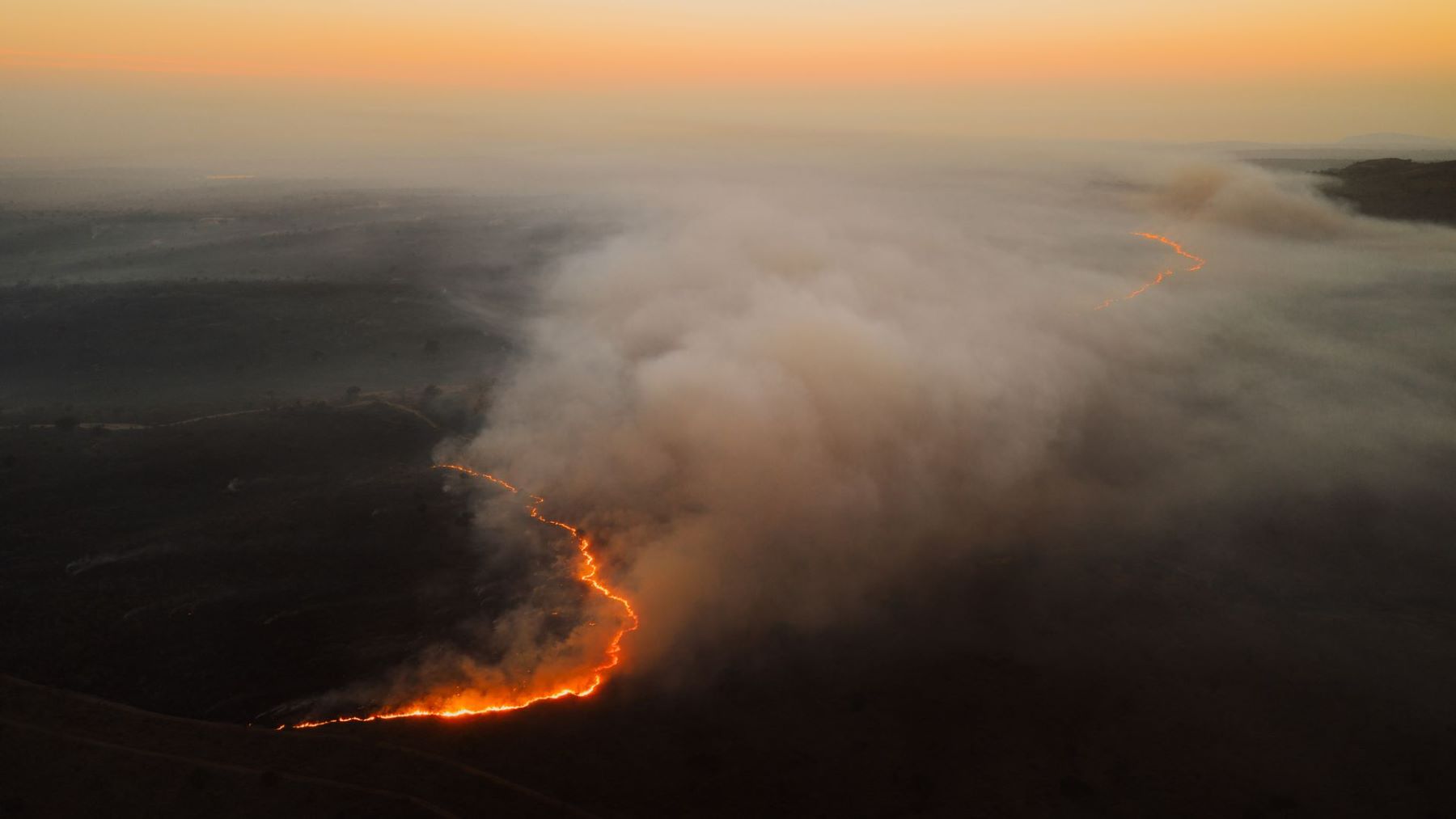
The smoke from Indonesia’s fires has brought additional air pollution to neighboring countries. Singapore and Kuala Lumpur recorded very high levels of fine particles in the air, while East Timor temporarily suspended classes.
Official recommendations call for minimizing outdoor physical activity and, as much as possible, limiting exposure to the polluted air currently sweeping the cities. They also remind that the evolution of the smoke cloud will depend on how the fires progress and on the weather conditions in the coming days.
The fires still active on the islands of Borneo and Sumatra show how fire can become an international problem affecting the air quality of several countries at once.
The smoke from Indonesia’s fires
Singapore and Kuala Lumpur ranked this Wednesday as the world’s most polluted cities, due to the dense smoke from the forest fires that have persisted in Indonesia since August, according to data from the Swiss platform IQAir, which tracks air quality worldwide.
The government of Singapore reported this Wednesday that air pollution in the city-state had reached a “very high” level, the highest on record for the country.
PM2.5 concentrations, fine particles suspended in the air that, according to the World Health Organization (WHO), can penetrate deeply into the respiratory tract, reached a maximum of 251 micrograms per cubic meter, on the prosperous island, compared with the 50 recommended, according to the latest report from the National Environment Agency.
Facing this situation, the Singaporean government, which has been distributing masks to the population for days, has recommended reducing outdoor physical activity and limiting exposure to the pollution while these levels persist.
“Although the fires and the smoke haze could improve (…), it is expected that both phenomena will persist in several areas, with a continued risk of severe cross-border smoke pollution episodes,” the agency said, which also predicted that the haze would continue to affect Malaysia and Indonesia in the coming days, where there have been increases in respiratory diseases and conjunctivitis.
For its part, the government of Jakarta said it would not declare the forest fires a national disaster and stated that it expects to extinguish them within a maximum of one month, without detailing how it plans to achieve this.
The Coordinating Minister for Political and Security Affairs, Dudung Abdurachman, confirmed to local press that Indonesia rejected that possibility, stating that the government remains capable of managing the crisis despite the cross-border haze.
Also, Indonesia’s Environment Minister, Jumhur Hidayat, said that the fire could be controlled in the coming weeks because “the intensity” of the flames “is already starting to decrease”, according to statements collected by the state news agency Antara, in which he acknowledged, however, that firefighting operations still face many difficulties.
In East Timor, the Ministry of Education suspended this Wednesday temporarily all classes nationwide until next week “as a preventive measure to protect the health of students, teachers and other members of the educational community, given the current air quality conditions”.
The decision was taken after the latest official reports on the deterioration of air quality which were affected by pollutant particles from the fires and agricultural burning in the region.
The fires, which have affected Indonesia for months, especially the islands of Sumatra and Borneo, are partly linked to the expansion of palm oil plantations and the burning of land to clear for crops.
Furthermore, the droughts associated with the El Niño phenomenon have worsened the situation, particularly in peatlands, which are wetlands formed by the accumulation of partially decomposed plant matter, turning into a perfect fuel that keeps the fire active underground even after the surface flames are extinguished.
