
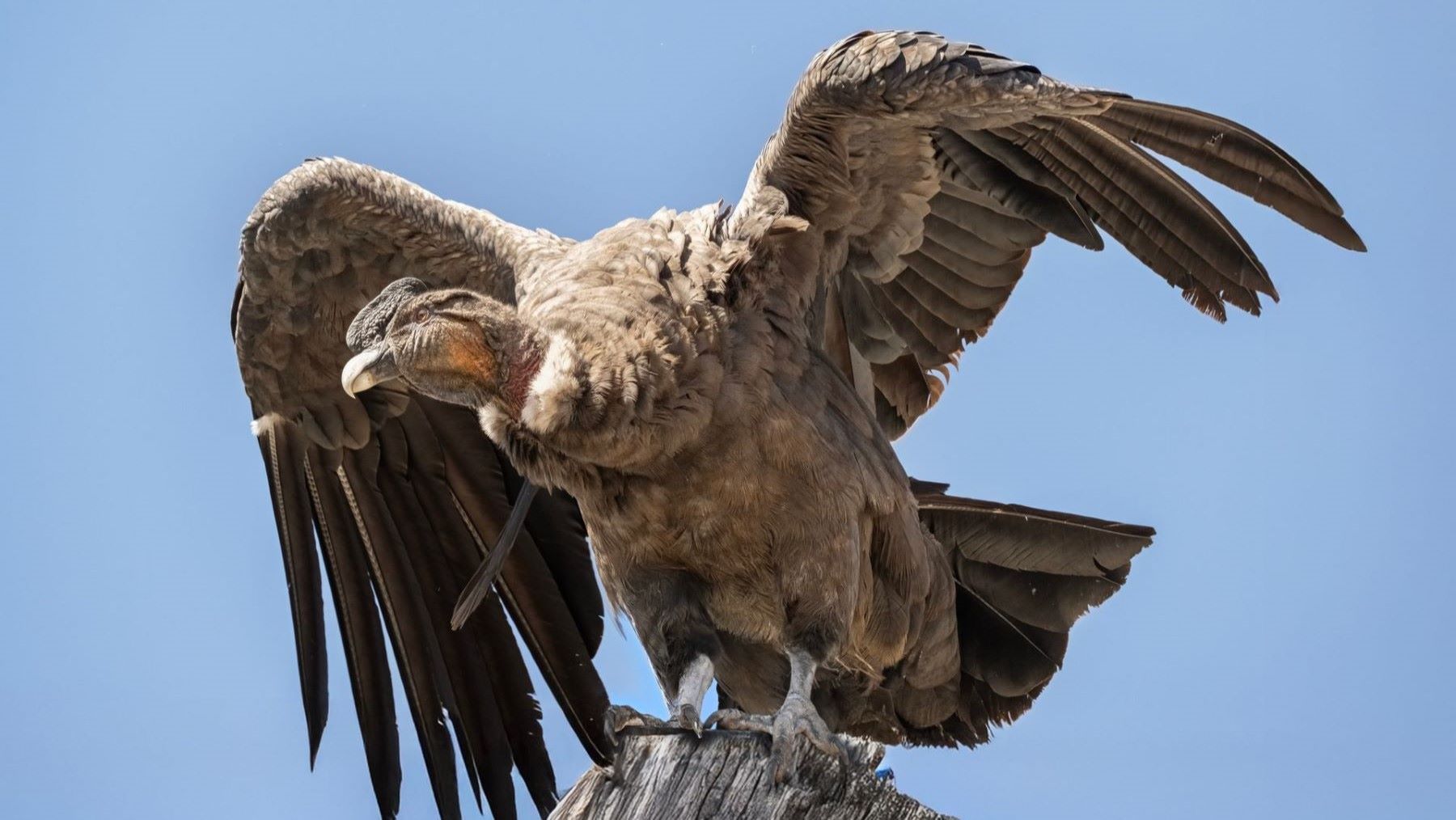
A condor and a swan can weigh about 11 kilograms, yet traversing one kilometer costs them vastly different amounts of energy. A glide flight, drawing on air currents, can prove even more energy-efficient than swimming.
This is what an international study published in Science indicates, in which the University of Granada participated, analyzing the movements of 50 species of birds and bats living in the wild.
The condor, which gains a huge advantage from rising thermal currents, uses 79% less energy than a swan
Glide flight may use less energy than swimming
An international study has demonstrated that the most energy-efficient form of locomotion in the animal kingdom is flight, surpassing swimming, especially when air currents are leveraged to conserve energy.
The University of Granada (UGR) participated in the largest study to date on the energetic costs of flight in nature, a project whose findings are published in Science and which places swimming lower in the hierarchy.
As an illustration, the study compares an Andean condor and a swan, both weighing about 11 kilograms. Yet the condor expends roughly a fifth of the energy that the swan does to travel each kilometer in flight.
The difference lies in the air, since the condor exploits ascending thermals and flaps only about 0.1% of its flight time, whereas the swan does so for 99% of its time aloft.
This international study combined data from 50 wild bird and bat species to show that, thanks to the atmosphere, flying can be the most «affordable» way for animals to travel.
“For us, the sky may seem merely the backdrop against which flying animals move, but it is an essential resource that can dramatically alter the cost of a journey,” explained the study’s lead author, Dr. Martina Scacco.
Until now, textbooks ranked the ways animals move by their energetic costs and placed swimming at the top, while running was considered the most energy-intensive mode.
That classification comes from measurements conducted in laboratories with animals in water tanks, wind tunnels, and treadmills, which differ from the realities of free-llying animals.
The work assigns a price tag to the difference in energy expenditure and emphasizes that a condor requires 79% less energy to cover the same distance than a swan. The study combines 17 years of GPS and accelerometer tracking data from 850 birds and bats across 38 species, together with four years of radar-tracking data, undertaken by an international team of 68 researchers.
Spanish science is represented through contributions on the flight of vultures and storks, thanks to the Doñana Biological Station (EBD-CSIC), the Miguel Hernández University (UMH), and the University of Granada (UGR).
The study is the first to consider the atmosphere’s role in the movement of so many wild species on a global scale, offering a key for the conservation and management of aerial species.
