
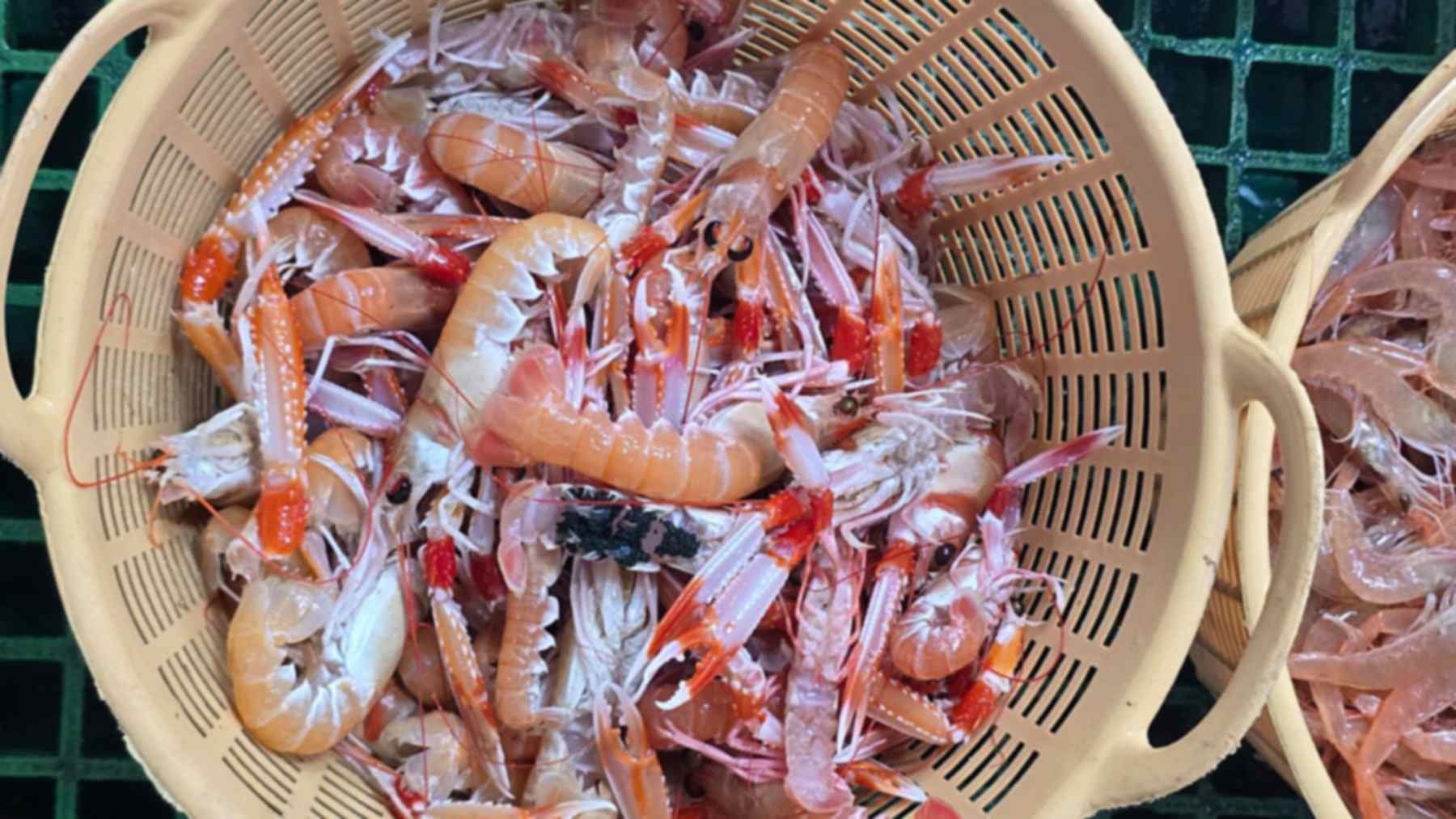
Since October 27, a team from the Spanish Institute of Oceanography (IEO-CSIC) has been operating in the Gulf of Cádiz aboard the research vessel Vizconde de Eza. Until November 13, after 18 days at sea, it will deploy bottom trawls. Their goal is to estimate how many hake, octopus, white shrimp, and langoustines inhabit the area and on which seabed types they are concentrated.
The campaign is named ARSA 1126, and its results will inform guidance on how to fish without exhausting the fishing ground. Is an entire ship necessary for that? Yes, because without an on-site census it is very difficult to determine whether the fleet is catching more than the sea can replenish.
Three Centers Aboard
Vizconde de Eza is a vessel of the Ministry of Agriculture, Fisheries and Food. The Secretaría General de Pesca provides the ship and the crew, and the European Union cofinances the campaign through the European Fisheries Fund (EFF). Scientific leadership is under the IEO.
Crew come from the oceanographic centers in Vigo, Santander, and Cádiz. At the helm is Yolanda Vila, a Cádiz center scientist who is in charge of the campaign. In addition to fish, the team will collect data on the water column and on the seabed sediment.
For those living along the coasts of Huelva or Cádiz, the name of the vessel may not ring a bell. But what is recorded on its deck over these days could influence what is fished in the years ahead.
An Assessment Independent of the Market
The key of these campaigns is that they do not depend on what fishers declare. “This type of campaign provides information independent of fishing activity, essential for a proper assessment of the exploited stocks,” Vila explains.
From what is brought on deck, abundance indices will be calculated for depth bands. Sizes will be measured, and biological data will be collected. The team will also study the feeding habits of fish, crustaceans, and mollusks.
It may sound like scientific paperwork. But those figures feed the guidance that later shapes quotas and fishing closures. And that, sooner or later, is reflected in the fish market.
Hake, Octopus, White Shrimp, and Langoustine
According to the IEO, the ARSA campaign will carry particular weight for bottom-trawl fisheries in the Gulf of Cádiz. The focus is mainly on hake, octopus, white shrimp, and langoustine.
They are not just any creatures. The European hake has lost a large part of its genetic diversity. And langoustine spends a lot of time sheltered in its burrow, making the study of its behavior a delicate task.
ARSA is part of the PESCADIZ II project, directed by Vila from 2022 to 2027. The project has funding of 76,596.99 euros. One of its aims is to evaluate these species within the ICES working groups, especially those focused on cephalopods and langoustine.
Microplastics and Museum Specimens
The campaign will also search for microplastics in the surface layer of the sea and in the stomachs of the target species. In other words, the study will check whether these tiny fragments end up inside the animals that are later sold.
Additionally, crustaceans, mollusks, and polychaetes (marine worms) will be stored for the Cádiz Oceanographic Center. They will join the IEO-CSIC Reference Marine Collections. In a sea already described as a sieve of exotic species, keeping that archive helps detect new arrivals.
Polychaetes do not appear on any restaurant menu, of course. But they are part of seabed life, and cataloging them carefully allows researchers to revisit them many years hence.
In February, the Miguel Oliver Set Sail
This is not the first ARSA of 2026. The IEO already conducted the ARSA 0326 campaign in winter, from February 21 to March 4. Twelve days of work aboard the vessel Miguel Oliver.
The autumn campaign lasts six more days and includes microplastics. “Oceanographic-fishing campaigns in the Gulf of Cádiz have been conducted systematically since the early 1990s,” Vila notes.
They span more than three decades of data, and that allows trends to emerge that a single year would mask. It’s no small thing.
No Figures Until Return
The IEO note does not reveal results or say when they will be published. It also does not clarify how many net hauls will be conducted. We will have to wait to learn whether hake or langoustine are faring better or worse than before.
Meanwhile, the debate over trawling remains active in Europe, where Spain and Italy blocked an extension of the veto on bottom-trawling fishing. The press release about ARSA 1126 has been posted on the IEO’s website.
Photo: Marián Torres, Cádiz Oceanographic Center (IEO-CSIC)
