
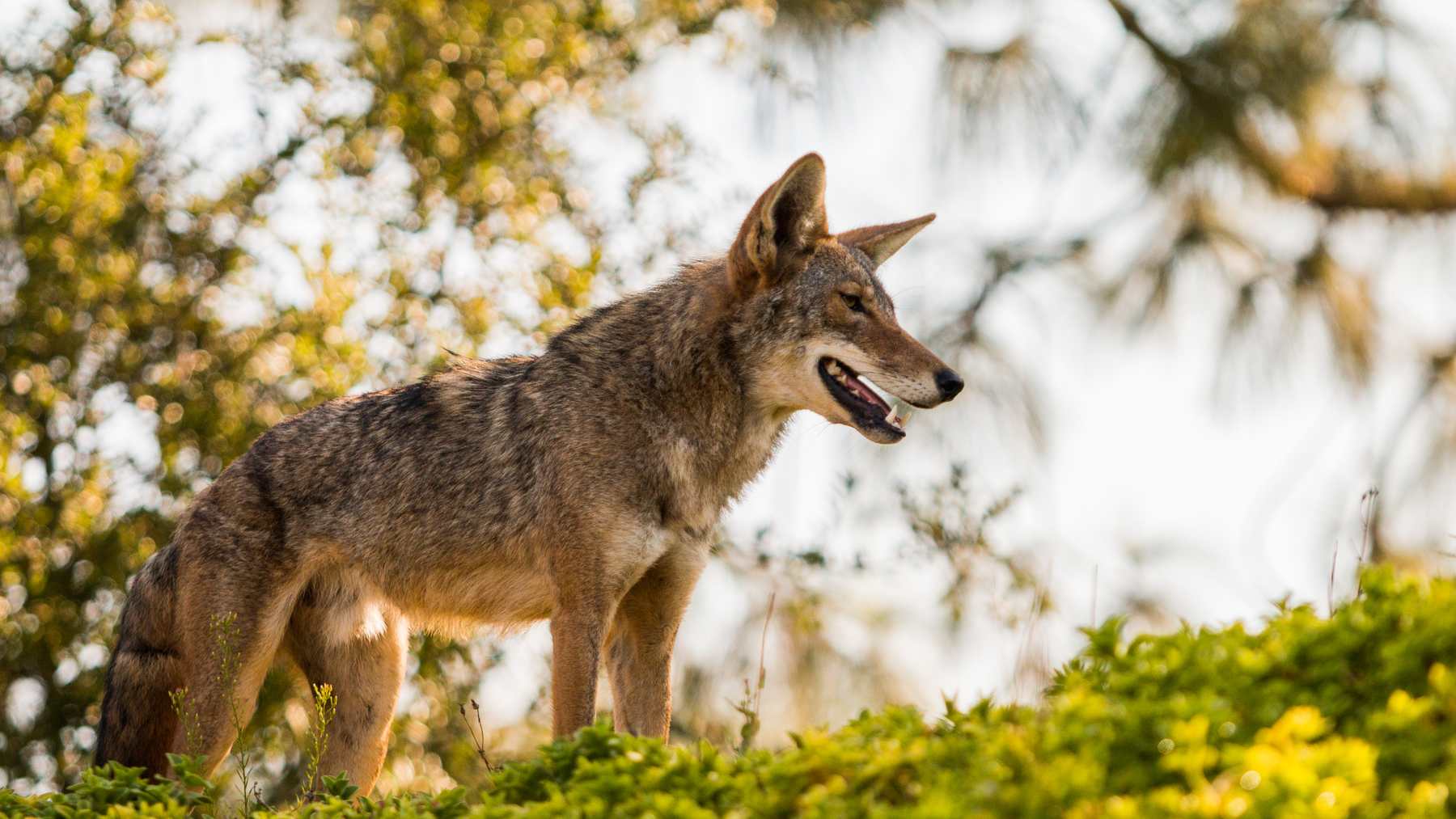
Studio City’s coyote, known to the neighbors of this Los Angeles neighborhood as Wendy, spent almost a year with a large swelling on her face due to an infection from two shotgun pellets lodged in her head, and she was euthanized on September 8, 2026. The reward to identify the person who shot her has risen to $20,000 from two donors.
On September 14, Anna Reams, from Wildlife Care of Southern California, filed a petition with the California Fish and Wildlife Commission that cites Wendy as an example of what is wrong with the rules. The center knew what was happening to the animal, but its rehabilitation permit did not authorize it to capture her.
A Year with a Swollen Face
“For months, neighbors saw her wandering the neighborhoods with a pronounced swelling on the left side of her face,” Mark Rulon writes in the Change.org petition. According to Rulon, the animal struggled to eat and to breathe.
According to that same account, the first notices of the swelling date back to September 2025. Coyotes have long adapted to U.S. cities, and a recent study showed that urban coyotes in Chicago help balance the city’s ecosystems.
Wildlife Care of Southern California, a wildlife rehabilitation center founded in 1994 that operates in Ventura and Los Angeles counties, had the experience and resources to help, according to the petition, but did not have the permit to capture her. The administration did not respond in time.
Two Shotgun Pellets in the Head
Wendy was captured in late August, after weeks of monitoring, and was placed in the care of Wildlife Care of Southern California, according to The Injury Firm’s account. X-rays found two pellets lodged in her head.
The infection caused by those wounds had destroyed the left side’s upper jawbone. Veterinarians found no surgery or treatment capable of restoring normal function, and Wendy was euthanized on September 8, 2026.
According to Rulon, Wendy had lost teeth, was blind in one eye, heard poorly in one ear, and could no longer eat normally, and the chronic infection had destroyed parts of her upper palate.
Two Donors and $20,000 in Rewards
The Southern California Pit Bull Rescue opened the reward with $10,000 donated by its founder. The money is for anyone who provides information leading to the arrest and conviction of the person who shot Wendy.
On September 22, The Injury Firm announced it would add another $10,000, with attorney Hiva Bana, founder and president of the firm, and Amir K. Nevis among the donors. The firm acknowledged that no one has been identified so far.
Anyone with information can contact the Southern California Pit Bull Rescue or local authorities, and the California Department of Fish and Wildlife maintains its confidential CalTIP line (888-334-2258) to report wildlife crimes.
The firm recalls California Penal Code Section 597, which makes it a crime to mutilate, injure, or kill a living animal in a malicious and intentional manner. Penalties can include imprisonment and a fine of up to $20,000.
Spanish rehabilitation centers know well this kind of injury, as shown by the two red kites released in the Balearic Islands after recovering from gunshots. In Los Angeles, coexistence with urban wildlife also has its own history, such as the puma P-22, which lived for more than a decade confined between freeways.
The Petition That Bears Her Name
Reams’s petition carries tracking number 2026-19 and asks to modify Sections 679.2 and 679.3 of Title 14 of the California Code of Regulations, which regulate wildlife rehabilitation. The aim is that permitted rehabilitators can capture injured, sick, or debilitated wild animals, always with Department-approved training and humane capture methods.
According to the text, the current regulations do not offer a clear and coherent process for qualified wildlife rehabilitators to capture on-the-ground injured animals, and that gap can cause dangerous delays while the animal’s condition worsens.
The Commission was to receive the petition on October 13, during its October 13–16 meeting. According to the staff briefing, these requests follow a two-meeting cycle, and the decision on 2026-19 is expected for December 15–16, 2026.
In parallel, the Change.org campaign, launched on September 18, had surpassed 300 verified signatures by October 19. “This is not about letting the public trap wildlife,” clarifies Rulon. What is sought, he explains, is that trained and qualified professionals can intervene when an animal suffers.
What to Do When You Encounter a Wounded Animal
The California Department of Fish and Wildlife (CDFW) has a guide for those who encounter sick or injured wildlife. It warns that wild animals rarely need human help, though it concedes that a visible injury is one of the situations where intervention can help.
The basic rule is clear: do not capture, handle, confine, or feed the animal without the guidance of a trained professional, and call a CDFW office or an authorized rehabilitation center.
Wildlife Care of Southern California also asks on its website that neighbors not permit the use of rodenticides in their communities, a poison that already reaches barred owls in the forests of northwestern California.
What Is Still Not Known
No one can say that an earlier capture would have saved Wendy, and her advocates acknowledge it. “We will never know for certain whether earlier treatment would have saved her, but she deserved that opportunity,” writes Rulon.
The so-called “Wendy Law” is not a law that has been enacted. It is the name of a campaign and a petition that the Commission still has to consider, and the reward amount comes from the donors themselves.
Wildlife Care of Southern California’s 2026-19 petition appears in the official documentation of the California Fish and Wildlife Commission’s October 13–16, 2026 meeting.
Photo: NPS / Connar L’Ecuyer
