
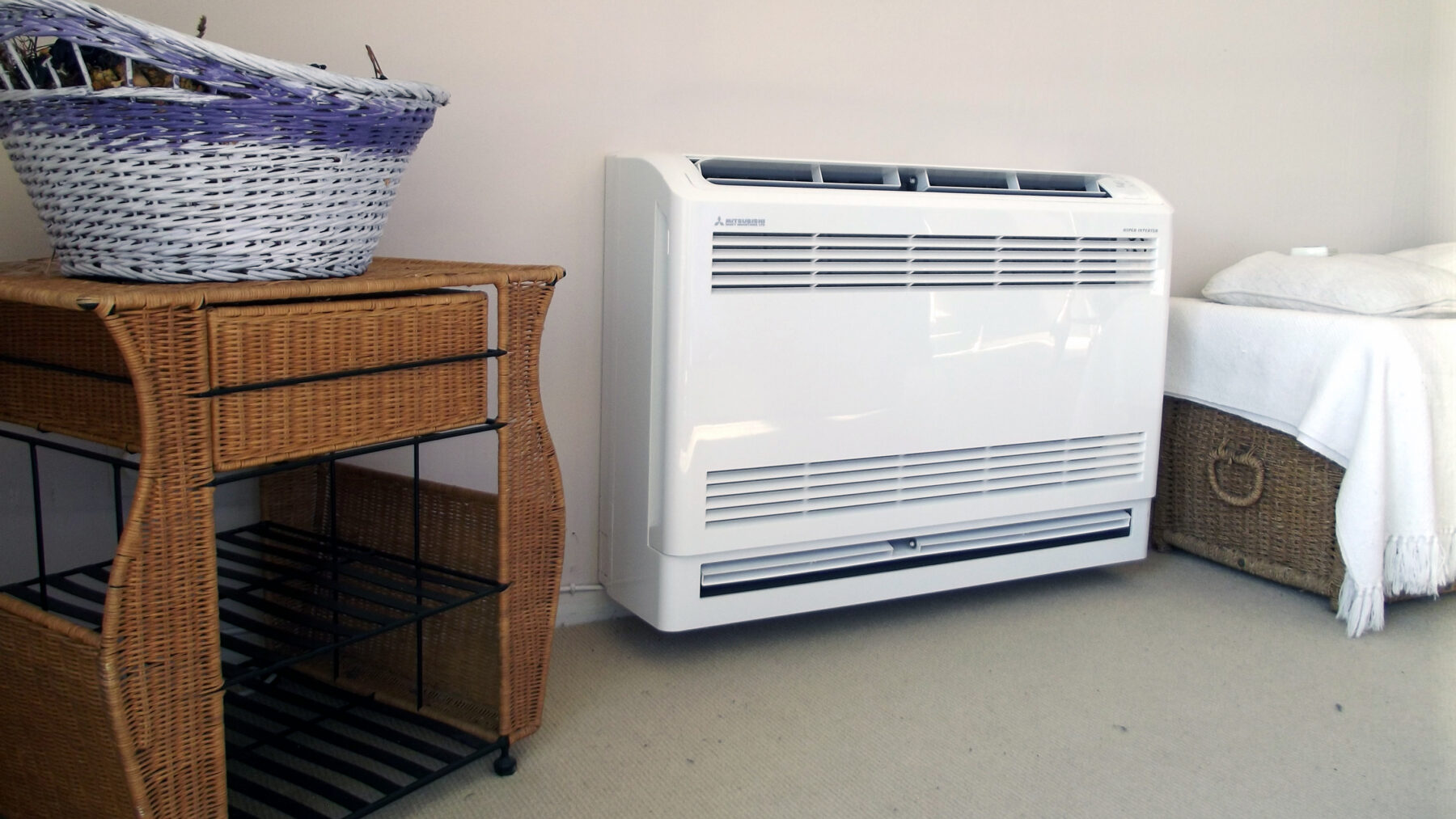
In a home, the Institute for Energy Diversification and Saving (IDAE) recommends setting the air conditioning to 26°C or higher during summer. According to its savings guidelines for households, this temperature is sufficient to maintain comfort at home if you wear appropriate clothing. It is advice aimed at reducing expenses, not a mandate, because the regulations that cap temperature do not extend to residences.
The 26°C figure corresponds to the minimum that the law does impose in offices, shops, cinemas, or restaurants. The 27°C limit comes from a 2022 energy-saving royal decree-law and applied only until 1 November 2023.
How to save on air conditioning, according to IDAE
The agency’s recommendations focus on habits that make the unit work less, and four of them address the most common questions.
Do not lower the thermostat to cool faster. When you arrive at a overheated home, the temptation is to crank the unit to 20 or 21°C so the chill arrives quickly. IDAE dismisses this: choosing a temperature lower than usual when turning it on does not cool the home faster. What can happen, according to the agency, is that the cooling becomes excessive and leads to unnecessary expense. The sensible approach is to set 26°C from the outset.
Clean the filter and don’t skip maintenance. IDAE urges periodic filter cleaning and regards maintenance as essential, even though it does not specify an exact interval (the practical reference is the manufacturer’s manual). It also offers a clue to spotting problems: if the unit cools less than before, it could indicate a fault or a refrigerant leak. Regular check-ups, it adds, can save energy and extend the life of the equipment.
Ventilate at night and lower blinds. IDAE recommends opening windows at night or early in the morning, the coolest hours, and notes that lowering awnings and closing blinds reduces heat gain inside. For sleeping, it does not prescribe a different temperature, so the 26°C or higher reference remains in force.
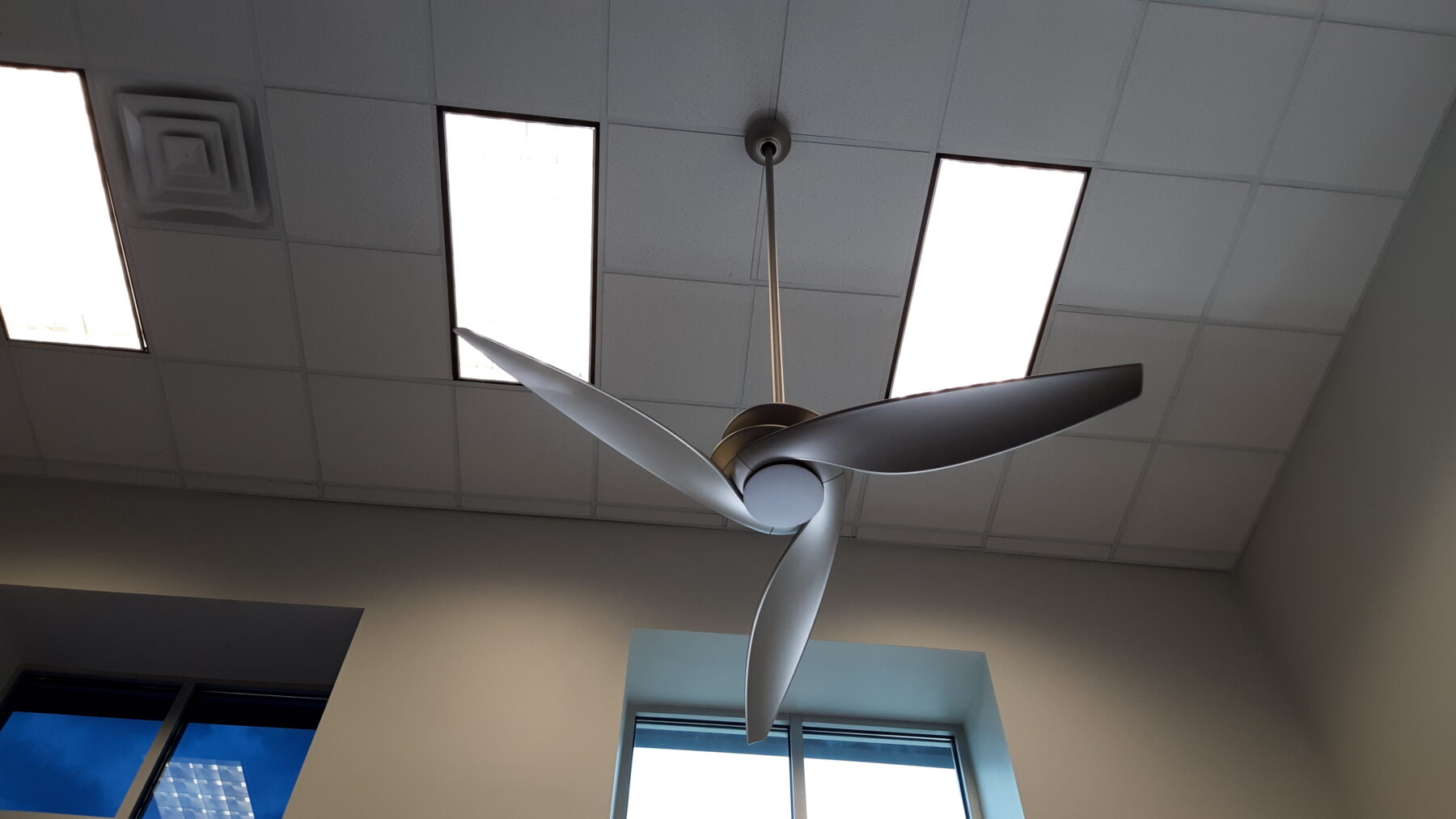
Try using a fan first. A fan, preferably a ceiling one, can be enough to feel comfortable, according to IDAE, because moving air creates a sensation of a 3 to 5°C drop in perceived temperature. It is a sensation: the room air is not actually cooled, only how the heat is perceived changes. IDAE does not specify at what temperature a fan stops being sufficient, so the decision depends on each home and each person.
What all this means for the bill depends on the unit’s power and the hours it remains on. To make that calculation, HoyEco explains how much air conditioning consumes, in kWh per hour, and the household-energy table allows comparing it with other appliances.
What temperature does the law require in offices, shops, and restaurants
If you work in an office or spend the afternoon in a shopping center, the air temperature is indeed regulated. Here are the figures that circulate and what each one means:
| Figure | Source | Where it applies | Value |
|---|---|---|---|
| 26°C or higher | IDAE recommendation | Homes | Saving tip, not mandatory |
| No less than 26°C | RITE, IT 3.8.2 | Offices, shops and public venues | Mandatory and in force |
| No less than 27°C | Royal Decree-law 14/2022, Article 29 | Same buildings | Only in effect until 1 November 2023 |
| From 23 to 25°C | RITE, design conditions (IT 1.1.4.1.2) | Installation calculations | Technical reference, not mandatory |
The current limit appears in the Regulation of Thermal Installations in Buildings (RITE), approved by Royal Decree 1027/2007. Its technical instruction IT 3.8.2 states that in refrigerated spaces the air temperature cannot be below 26°C, with a relative humidity between 30% and 70%. The rule applies to buildings and spaces used for administrative, commercial, and public access, whether new or existing, a category that includes cultural spaces, venues, dining establishments, and places where people are transported. In this way, it covers both an Administrative Office and a clothing store, a cinema, or a private restaurant, and the expression “public buildings” often used is not fully accurate.
There are nuances. The obligation only applies when cooling is produced with conventional energy consumption and while the installation is in use, and it excludes spaces that require special conditions or have their own regulations, provided they are physically separated from the rest. The same regulation requires that temperatures and humidity be shown in rooms larger than 1,000 square meters and that spaces with street access have a door-closing system to prevent doors from staying open continuously. Verifications take place in both summer and winter, inspections fall to the autonomous communities, and a tolerance of 1°C is allowed in the room’s average temperature.
The 27°C figure has a different origin. It was set by Article 29 of Royal Decree-law 14/2022, of August 1, which tightened the limits in those same buildings (a minimum of 27°C with air and a maximum of 19°C with heating) and required informational posters and a door-closing system. Its final provision, seventeenth, established that temperature obligations would be in force only until November 1, 2023. The Constitutional Court records this in ruling 20/2024, of January 31, which explains that those provisions remained in force only until that date, and repeats in ruling 4/2026, of January 14, 2026, that the temperature provision has lost its validity.
The 23 to 25°C range appearing in some texts also originates from the RITE, but with a different interpretation. They are the interior design conditions for people with sedentary activity and light clothing (with relative humidity of 45% to 60%), i.e., the values used by technicians when calculating an installation. They do not obligate the user of the device and they are not the IDAE’s home-saving recommendation.
In winter, the same IT 3.8.2 sets a maximum of 21°C for heating in those buildings. In a dwelling there is no legal limit for that season, and the reference is found in the guide on heating temperature in winter.
A record summer and a September in 2026
The summer of 2026 was the warmest in the peninsula Spain series since 1961, with an average temperature of 24.5°C, 2.4°C above the 1991-2020 reference period, according to the summary of the Summer Climate by the State Meteorological Agency (AEMET). The daily highs averaged 2.8°C above normal and the lows 2.0°C, according to AEMET’s climate overview for summer.
AEMET counted 61 heat-wave days on the Peninsula and Balearics in 2026, the highest figure in the series as of September 9, which included a provisional September heat wave, compared with 41 in 2022 and 36 in 2025. The most intense wave lasted from July 2 to July 24. HoyEco revisits in another piece the heat waves that push up air conditioning use and what they mean for the electrical grid.
The heat did not fade with August either. September 2026 was the warmest on record in the series, which begins in 1961, with an average of 22.5°C in peninsular Spain, 0.7°C above the 1987 figure. For the first time, a September month exceeded the average summer temperature (22.1°C in the 1991-2020 period), and in 18 major stations the month’s minimum was the highest on record for their series.
