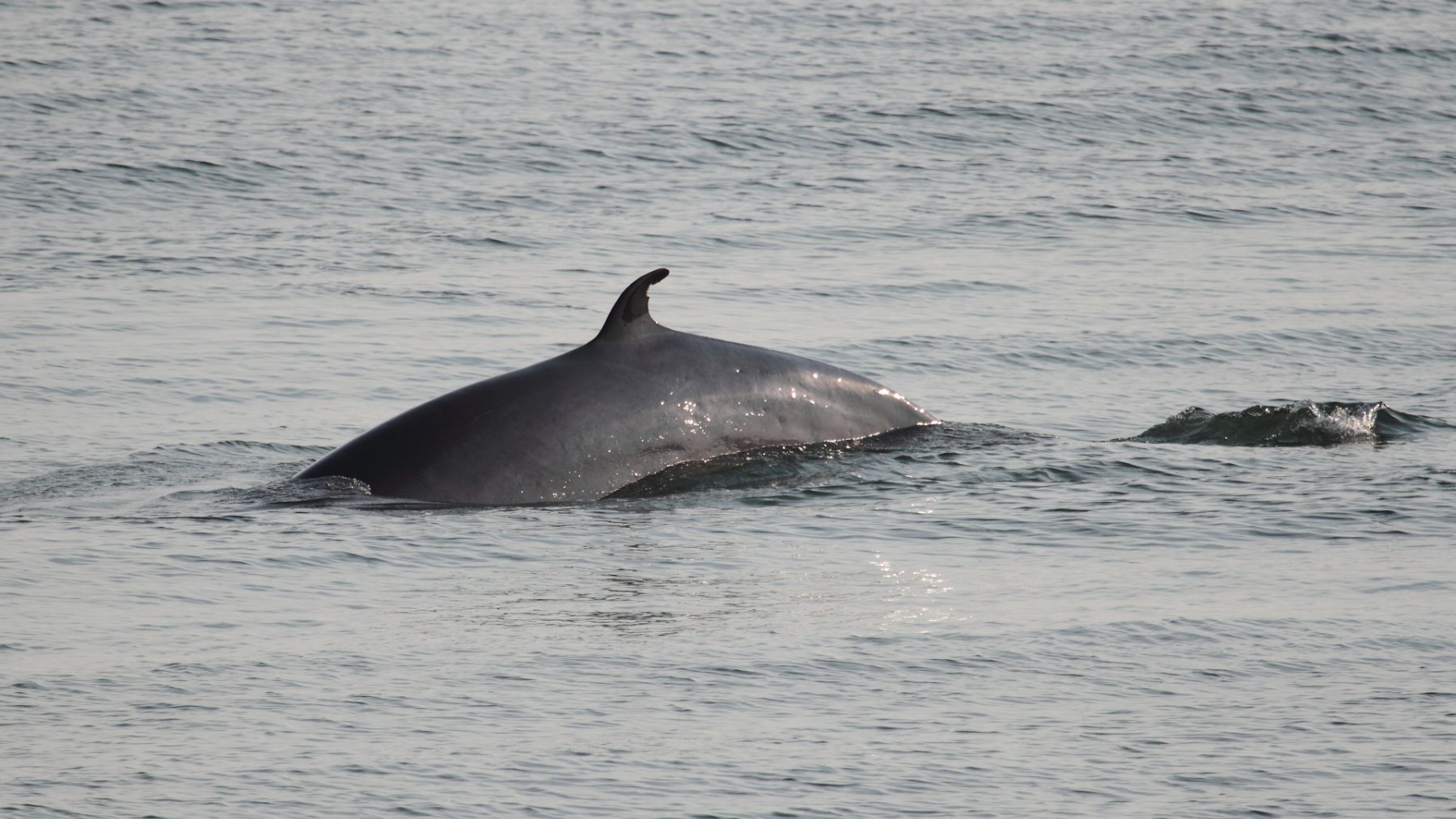
A minke whale of about 5.5 meters received help on September 8, off Cape Cod, Massachusetts, after traveling more than 64 kilometers entangled in fishing gear. Specialists removed most of the ropes, though they had to leave a segment embedded near a flipper to prevent hemorrhaging.
The animal regained a normal swimming pattern after the intervention, a sign that gave some hope to the rescuers. But the Coastal Studies Center (CCS), responsible for the operation, warned in its September 9, 2026 statement that the prognosis remained unfavorable.
A Finding from the Air
The story began on Sunday, September 6, just before sunset. Recreational fishermen spotted the whale in Cape Cod Bay and alerted that it was dragging lines and other fishing gear.
The following morning, the Marine Animal Entanglement Response (MAER) team searched for the cetacean off Provincetown and Truro, without finding it. The opportunity arrived on Tuesday afternoon when an aerial team from the Northeast Fisheries Science Center detected it near Nauset Inlet in Eastham.
The whale was more than 64 kilometers from the site of the first sighting. “It was a great stroke of luck that the aerial team sighted it again,” explained Scott Landry, director of the MAER program, who noted how unusual it is to relocate a minke under these circumstances.
Why a Rope Was Left in Place
rescuers found a thick rope caught in the mouth and several turns around the body. They first established a control line attached to the gear and then used a curved knife mounted at the end of a pole to perform selective cuts.
Why not remove it all? A strand was deeply embedded in the left flipper’s wounds, and pulling it out could provoke excessive bleeding. The decision was to remove what they could without adding that risk to an already injured animal.
Feeding Was Also at Stake
According to the CCS assessment, the arrangement of the ropes would have prevented the whale from feeding. The team believed it had been carrying the gear for some time, though the statement did not specify when the entanglement began.
To understand the problem, it helps to look at how these cetaceans eat. NOAA explains that minkes capture their prey by engulfing large amounts of water and feed on small fish, crustaceans, and other organisms. A rope that compromises the mouth thus affects an essential survival function.
A Threat That Could Persist
Entanglements do not always immobilize whales at the moment they occur. According to NOAA, some manage to shed the gear, while others carry it for days, months, or even years. That a animal continues to move does not mean it is out of danger.
The consequences can include difficulties in swimming, feeding, or breathing. The ropes can also open wounds and promote infections, while the heavy gear can suffocate smaller cetaceans. The damage can continue long after the initial encounter with the material.
Over Four Decades of Rescues
The CCS explains that since 1984 it has freed more than 200 large whales and other marine animals from entanglements that threatened their lives. Among the animals attended are also dolphins, seals, and marine turtles.
Each intervention can provide information to prevent new cases. NOAA analyzes the recovered gear to identify its origin and learn which zones, seasons, and fishing configurations pose risks. That information enables collaboration with the fishing industry to reduce dangerous encounters.
How to Help from a Vessel
If someone encounters an animal tangled in these waters, CCS asks that they notify the MAER team by calling 1-800-900-3622 or contact the U.S. Coast Guard via VHF Channel 16. After that, keep a safe distance and follow the professionals’ instructions.
NOAA recommends recording the position and obtaining photos or videos from a distance, if possible. It also urges not to enter the water or attempt to cut the ropes on your own, because the animal can react unpredictably. A precise report can be the most helpful aid.
In Cape Cod, the collaboration among fishermen, the aerial team, and the specialists helped relieve a severe entanglement, though the announced prognosis urged caution.
The official statement on this intervention was published on September 9, 2026 on the Coastal Studies Center website.