
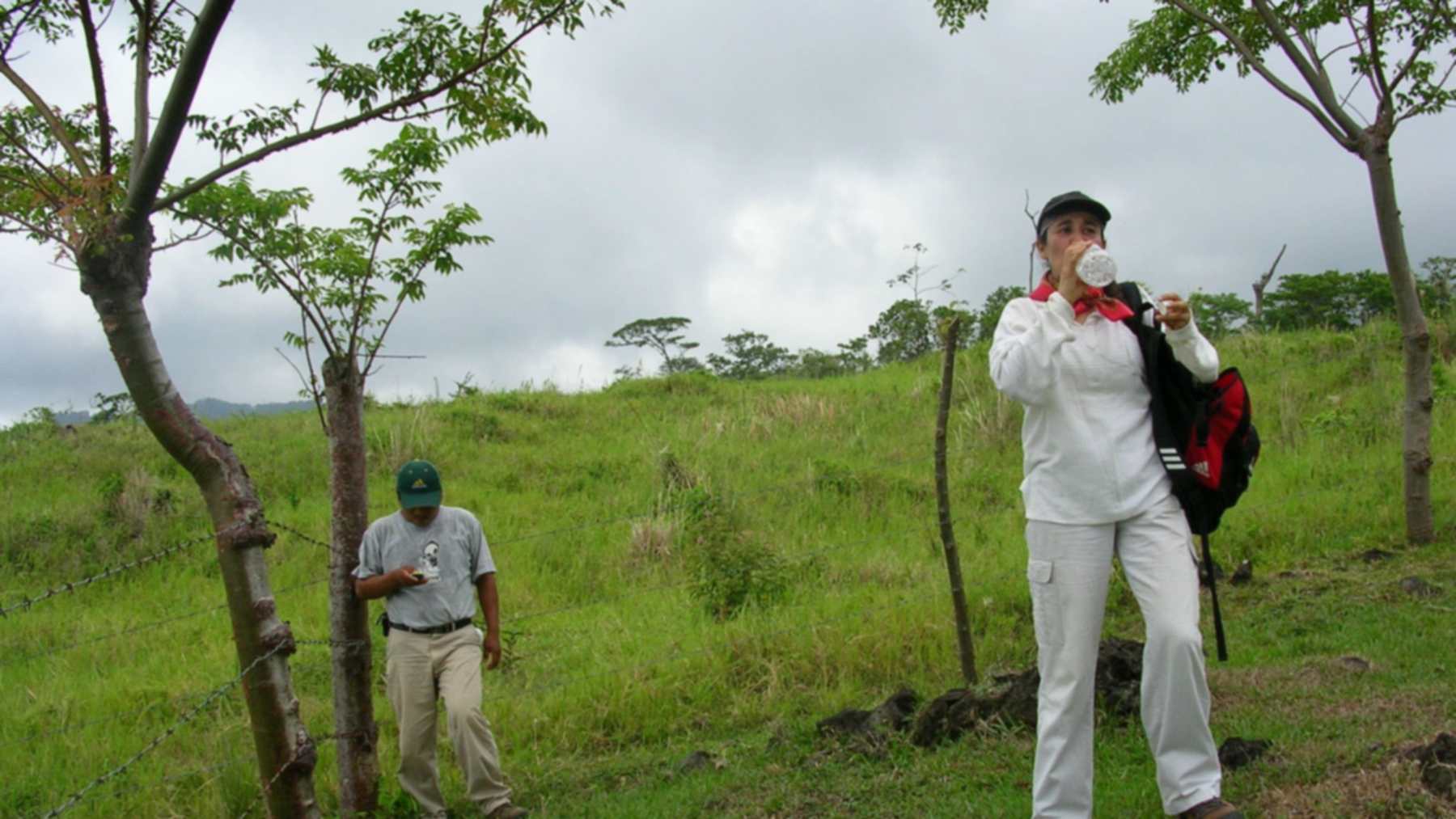
In July 2023, four pairs of researchers conducted a meticulous survey of 24 fenced plots, enclosed with barbed wire, in an old cattle pasture in Los Tuxtlas, in southern Veracruz (Mexico). They measured and recorded every woody plant or palm between 40 centimeters and 2.25 meters tall that had sprouted there on its own since the cattle were removed in 2006.
They counted 4,847 plants spanning 109 taxa. In the plots where trees that disperse seeds through animals had been planted, there were on average about 253 plants per plot, almost twice as many as in the plots allowed to recover without any planting, which averaged around 134.
The work is credited primarily to Luis C. Beltrán, from Pontificia Universidad Javeriana (Bogotá) and the University of Illinois at Chicago, along with researchers from the Universidad Autónoma del Estado de Morelos, UNAM, ITESO, and the Institute of Ecology of Xalapa. It has been published in the September 2026 issue of Forest Ecology and Management.
A pasture with forty years of cattle
The site lies about 3 kilometers northwest of the Los Tuxtlas Tropical Biology Station, inside the Los Tuxtlas Biosphere Reserve. Until the 1960s it was lowland humid rainforest. According to the study, it was cleared with fire to plant maize for a single season and was subsequently filled with pasture grasses for cattle.
For 30 to 40 years it was used for intensive grazing, with 2 to 3 cows per hectare and the use of herbicides to suppress shrubs attempting to regrow. The nearest forest edge to the plots is 95 meters away.
Three approaches to restore the forest
In July and August 2006, the researchers who set up the experiment fenced 24 plots of 30 by 30 meters, spaced 35 meters apart on pasture where cattle continued to graze. The posts consisted of living stakes from a local tree, Gliricidia sepium, pruned so they did not bear fruit.
Eight plots received native trees whose seeds are moved by animals, eight received wind-dispersed species, and eight were left unplanted to observe what would happen with the so-called natural succession, the spontaneous return of vegetation when the barrier to regeneration is removed. Each planted plot received 144 saplings of 12 species, planted 2 meters apart.
The aim was to test whether trees that provide fruit to birds, bats, and other animals attract more forest seeds than those that depend on the wind.
What emerged from the 2023 census
The planted trees themselves were not included in the census. Only the recruits—new plants that germinate and manage to establish themselves—were counted.
Of the 109 taxa, 80 were identified to species, five to genus, four to family, and 20 remained unidentified. Plots planted with wind-dispersed species had an average of about 219 plants, counting both the animal-dispersed and the naturally recruited individuals.
In terms of the number of species per plot, the order was the same: 33.5 in the animal-dispersed plots, 29.1 in the wind-dispersed plots, and 20 in the natural-succession plots. “Tree planting increases the magnitude of recruitment relative to natural succession,” the authors write.
The most common plants in nearly all plots were shrubs and trees such as Piper hispidum, Hampea nutricia, or Bursera simaruba, the palo mulato that is also used as a hedge in the region.
A wind-dispersed tree that multiplied on its own
After 17 years, the planted trees were already producing seeds, complicating the analysis. An example is Vochysia guatemalensis, one of the wind-dispersed species, whose offspring accounted for 23.8% of all new plants in its plots.
Therefore the team repeated the counts excluding the descendants of the planted species in each plot. With that filter, the animal-dispersed plots remained with about 241 new plants on average, and the wind plots dropped to 164.
The apparent advantage of the wind plots, with more non-pioneer plants per pioneer, “was an artifact entirely caused by the prolific recruitment of a single planted species, Vochysia guatemalensis,” the researchers state.
The authors believe that fleshy-fruited trees, as they grow, function as “biological magnets” that attract more forest animals, and that those animals bring seeds of other species. For years, other projects—such as a Brazilian family’s effort to convert cattle pastures into the Atlantic Forest—have aimed to recover both trees and fauna simultaneously.
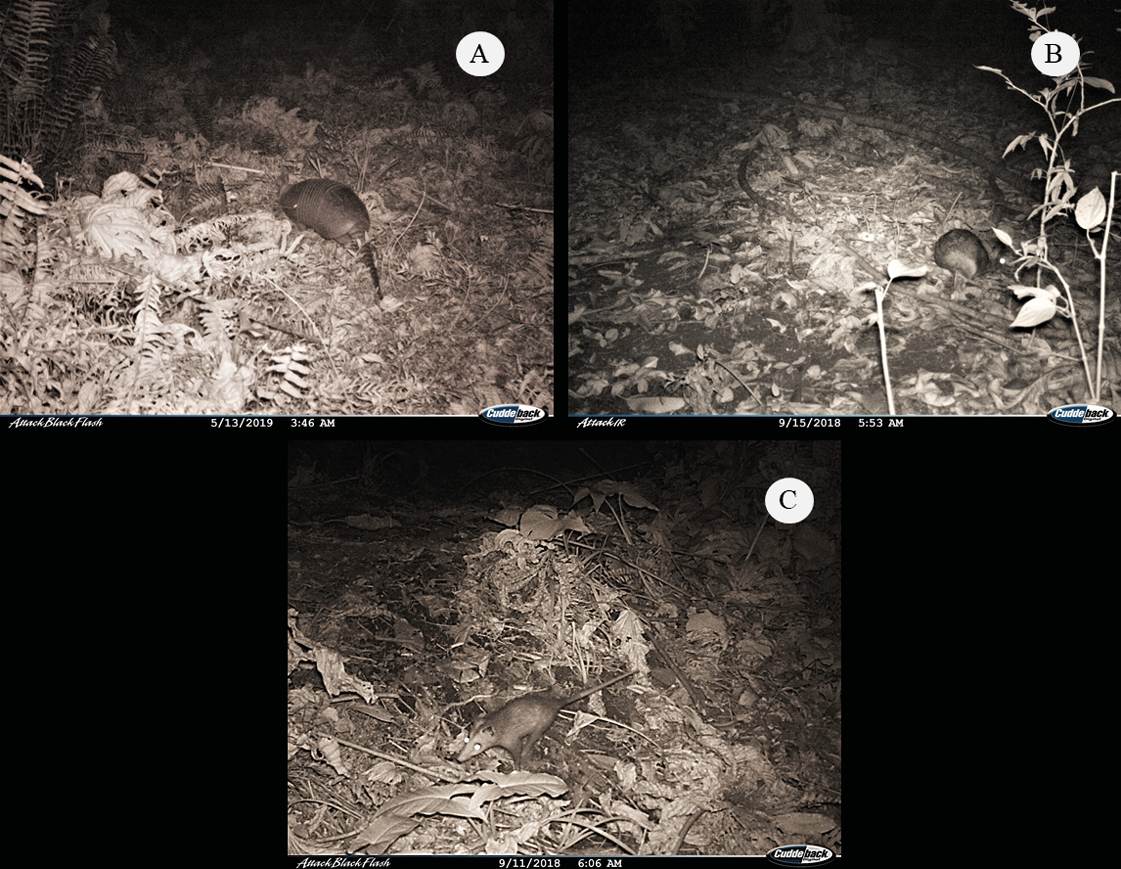
Rare plants that only appear where planting occurred
The census found 21 taxa exclusive to the animal-dispersed plots, 20 in the wind-dispersed plots, and only 10 in the unplanted plots. Across the understory, most of the 109 taxa appeared as a single individual.
According to the study, the plantings “provide a higher-quality habitat than natural succession, facilitating the arrival and persistence of rare forest species that would otherwise be excluded.”
In the unplanted plots there was another problem. An invasive fern, Nephrolepis brownii, covers the ground and competes with the young plants that arrive, and it is more abundant where nothing was planted. By year 10, canopy cover exceeded 80% in the planted plots and remained around 30% in natural succession, according to earlier work from the same experiment.
It is the same idea behind cases like Niger’s farmers who allowed tree sprouts buried underground to reemerge, although there the impulse came from existing roots, whereas here it came from planting.
What the study still does not demonstrate
Differences were not equally robust across all comparisons. Between the animal-dispersed plots and the wind-dispersed plots, the difference in plant numbers did not have statistical backing when counting all plants, and only a weak effect when excluding the descendants of planted species.
The understory composition, i.e., which species grow beneath the canopy, looked very similar across the three treatments. Excluding the descendants of the planted species, the restoration strategy explained only 3.7% of the differences in composition between plots.
The authors attribute this to the plots being very close to one another and animals carrying seeds from one plot to another. Natural recovery, they conclude, “is a landscape-scale process.”
There is still no mature forest. In the two preserved rainforest plots used as references, 41.7% of the understory plants were Astrocaryum mexicanum palms. “Although restored areas advance toward mature forest conditions, they have not yet converged with the reference forest,” the researchers admit.
Two hectares without cows on a cattle ranch
The 24 plots total just over two hectares within land that remains a cattle ranch.
Other long-term projects, such as the Queensland farm where more than 119,000 trees have been planted for bats or the South African hillside restored with shrubs since 1976, are also measured in decades. The data and the census code for Los Tuxtlas are openly published.
The full study has been published in Forest Ecology and Management.
The authors note that monitoring will need to continue until these young plants reach the canopy to confidently determine whether the three treatments ultimately yield a single forest.
Photo: Cristina Martínez Garza
