
The coordinator Stop Industrial Livestock Farming has denounced the existence of two macro-farm projects, located less than six kilometers apart, that threaten the Esla-Campos region in León, as one would lie inside the Zone of Special Protection for Birds (ZEPA) Oteros-Campos and the other about 2 kilometers away, a Natura 2000 Network space designated to protect steppe birds.
Two macro-farms put biodiversity and water resources of Esla-Campos in jeopardy
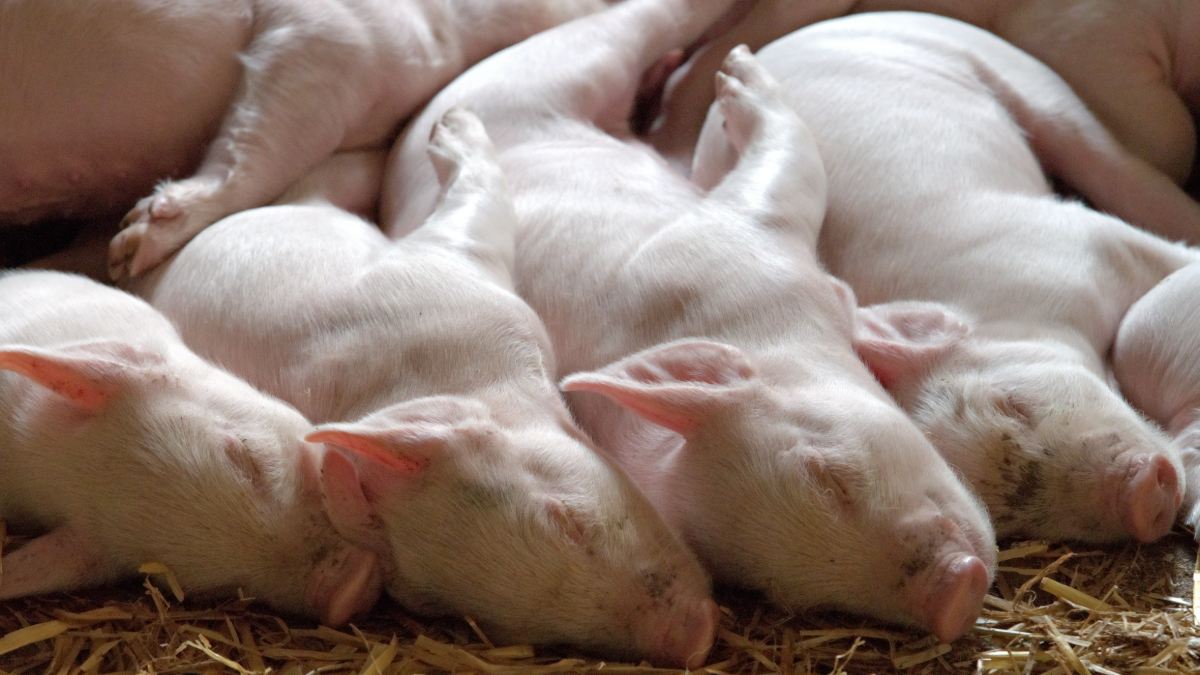
The situation concerns a project planned in Valencia de Don Juan for 3,024 breeding sows that reaches the legal maximum number of large livestock units, with an estimated production of 90,000 piglets per year, and the expansion of a poultry farm in the neighboring municipality of Villabraz that would rise from 117,000 to 214,500 hens.
According to the data collected in the dossiers submitted, the combined installations of industrial livestock farming would entail an annual water consumption of nearly 40 million liters, 24.3 million for the swine operation and 15.7 million for poultry, and would require more than 14,000 tons of feed per year.
26.5 million liters of livestock waste per year: a threat of environmental contamination
Furthermore, both facilities would annually generate 26.5 million liters of manure and poultry litter, equivalent to about 880 tanker trucks of 30,000 liters each, carrying more than 168 tons of nitrogen, according to the coordinator in a press release.
The poultry mega-farm in Villabraz, both the current operation and its expansion, lies within the ZEPA Oteros-Campos, a space of the Natura 2000 network designated to protect steppe birds.
The Junta of Castilla y León questioned for the impact of industrial farming on protected birds
«The report from the General Directorate of Natural Heritage of the Junta acknowledges that the project will entail the loss of a substantial area of potential steppe habitat. It regards, however, this as an insignificant impact because the existing macro-farm already nearly eliminates the presence of these birds in the area,» the coordinator stated.
The same report notes sightings of the great bustard and the lesser kestrel within a kilometer of the plot, of the calandra lark at 2.3 kilometers, and of the cenizo harrier within the same boundaries. The pig mega-farm would be built about 2 kilometers from this ZEPA, which hosts a breeding population of 578 great bustards, of national and international importance.
The protection due to Natura 2000 shines through as absent
For Stop Industrial Livestock Farming it is intolerable that the expansion of industrial farming could compromise spaces whose conservation is safeguarded by European law. The Habitats Directive obliges the assessment of the cumulative effects of projects that could significantly affect Natura 2000, even when they lie outside its boundaries.
According to the coordinator, the Junta of Castilla y León cannot turn biodiversity protection into wet paper nor allow the private gains of the livestock industry to translate into pollution, environmental degradation and social costs.
