
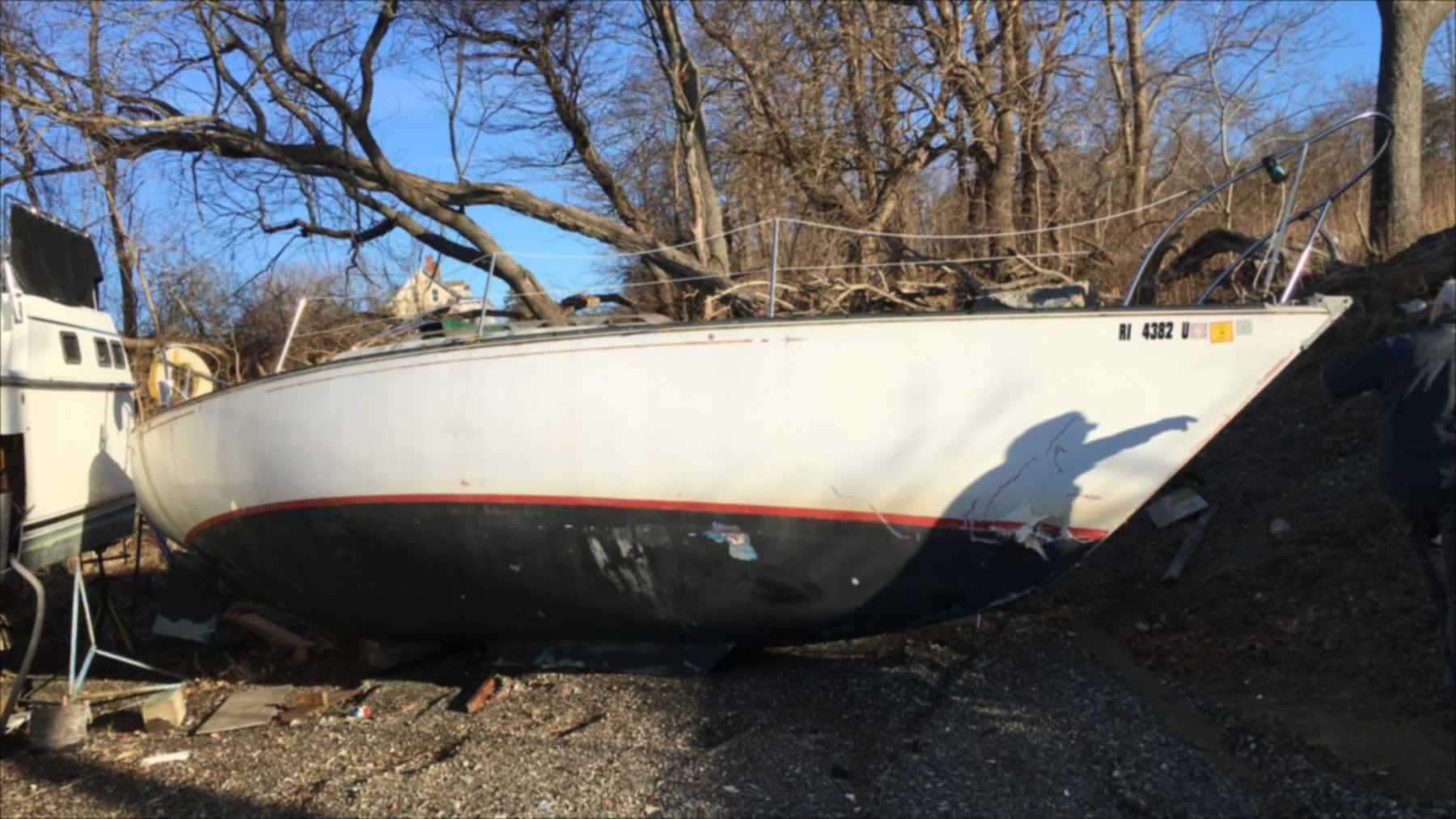
A boat can stop sailing long before its hull wears away. In Rhode Island, United States, a program driven by the foundation of the Rhode Island Marine Trade Association (RIMTA) has demonstrated that fiberglass from retired vessels can be repurposed in cement kilns, where it provides energy and substitutes part of the raw materials.
The WAVES initiative aims to broaden that experience and bring down its costs, with support from the National Oceanic and Atmospheric Administration (NOAA) and a schedule running from June 2025 to May 2027. The challenge is to make recycling more affordable for owners.
A Trial with Results
The pilot by RIMTA and Rhode Island Sea Grant began in 2018. According to the foundation’s February 2023 report, 80 short tons of fiberglass material had been collected, processed, and delivered to a cement plant in Holly Hill, South Carolina, equivalent to about 72.6 metric tons.
The experience showed that boat debris could reach an industrial facility and be used in its manufacturing process. The report also identified obstacles to expanding the model nationwide, including costs and the coordination between companies and government agencies.
Why Recycling Them Is Expensive
These hulls combine fiberglass fibers with a resin that, once cured, holds the structure together. Conventional thermosetting resins cannot be melted and remolded like some packaging plastics, which complicates recovering their components.
That resistance helps explain the end-of-life challenge. Separating the materials requires specific processes and can degrade the fibers, as described by the U.S. Department of Energy in its assessment of composite materials.
From Port to Kiln
Before shredding a vessel, fuels, batteries, and other items requiring separate handling must be removed. Metals and usable equipment are also recovered, and afterward the hull is reduced to fragments suitable for processing and transport.
In the cement plant, the material has a dual purpose. Its combustible portion provides heat, and its mineral components replace raw materials needed to manufacture cement, including silica and alumina.
This use is known as coprocessing and combines material and energy recovery. By design, it allows leveraging the hull without preserving it as a fiber ready to build another boat.
Thousands of Boats Each Year
RIMTA provides an industry estimate of about 200,000 recreational boats reaching end-of-life in the United States every year. It serves as a benchmark for the entire fleet, not a tally of 200,000 abandoned fiberglass hulls.
Mass production of boats with this material since the 1960s helps explain the buildup of aging units. When abandoned, they can cause pollution and navigation hazards, in addition to disposal costs for governments.
For coastal communities, the problem goes beyond a boat occupying space in a marina. Storms and hurricanes can also scatter damaged vessels and worsen management challenges.
The Bill Remains Heavy
Where does a solution that has already worked get stuck? NOAA notes that recycling fiberglass still costs more than sending it to a landfill, a gap that discourages many owners when the time comes to dispose of their boat.
RIMTA’s guide offers a concrete clue about that bill. In the pilot’s breakdown, shredding accounted for 59.1% of the cost, with dismantling, transport, and kiln-entry fees adding to it.
Therefore, the industrial usefulness of the material by itself does not guarantee affordability. Making the numbers work requires action across the entire chain, from the marina to the cement plant.
What WAVES Seeks
WAVES proposes gathering waste from different sources, including manufacturing byproducts and retired wind turbine blades. The idea is to work with larger volumes and better coordinate operations to reduce recycling costs.
That savings is a project goal, and the official brief does not yet present achieved cost reductions. It also does not provide a figure for emissions avoided by WAVES that would allow quantifying its climate benefit.
The next step will be to determine how much this alternative could be cheaper and whether it becomes accessible to more owners. Official information about the initiative, updated March 25, 2026, is published in NOAA’s Marine Debris Program.
Image: RIMTA