
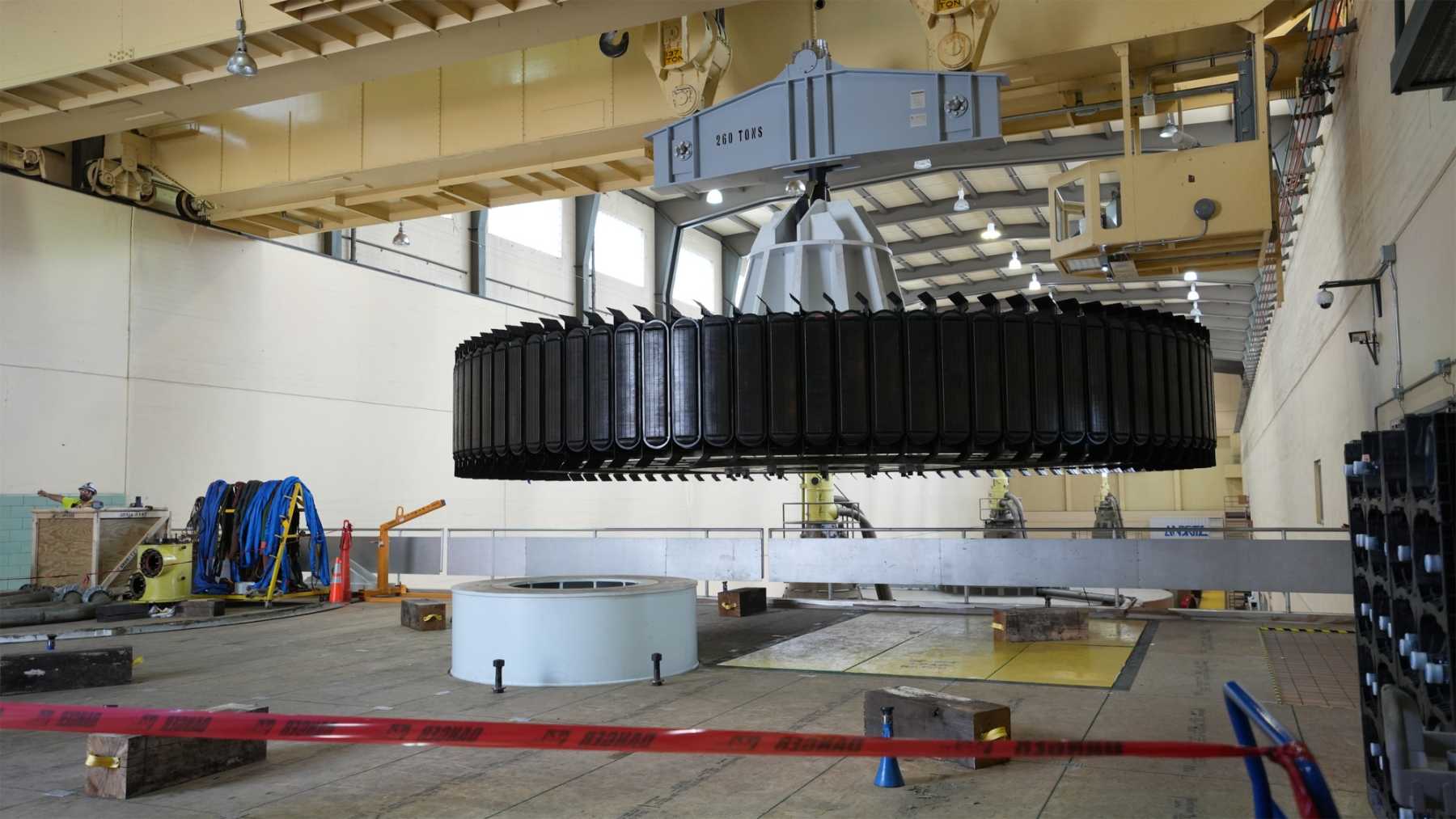
A component installed in 1957 is giving way to a new generation of equipment at the Old Hickory Hydroelectric Plant in Tennessee, United States. The U.S. Army Corps of Engineers retired the turbine from Unit 3 in October 2025 as part of a modernization that replaces the old five-blade runners with seven-blade ones.
The project aims to improve the power output and reliability of an existing facility on the Cumberland River. But modernization is ongoing, and the official schedule released in April 2026 places the commissioning of the first refurbished unit in April 2027.
Why the design is changing
The runner is the component with blades that spins as the water pushes on it. According to Andritz documentation, the company responsible for the upgrade, the design preserves about 6.7 meters in diameter and a speed of 75 revolutions per minute.
The most visible change is in the seven blades. The manufacturer explains that this configuration allows meeting the contract’s requirements for increased power and the cavitation limits.
What is cavitation? When water pressure drops sufficiently, vapor bubbles form that can collapse upon reaching zones of higher pressure. Those repeated micro-impacts can erode the metal, cause vibrations, and reduce performance, so controlling the phenomenon is part of the turbine’s design.
More power, with caveats
The original nameplates indicated 25 megawatts (MW) per generator, and the new specifications indicate 40.5 MW. The calculated difference between those nominal values is 62 percent, though that comparison does not allow us to claim the plant will produce 62 percent more electricity in a year.
The distinction matters. Power expresses how much a machine can deliver under certain conditions, while annual energy also depends on water availability and operating time. It is akin to distinguishing a household appliance’s rated power from what it ultimately costs on the bill.
Andritz estimates annual production of about 565 gigawatt-hours once the entire set is commissioned. That is 565 million kilowatt-hours, but it remains a forecast rather than a measured result after the upgrade.
A project of large scale
To reach the turbine, the rotor of the generator located above had to be removed first. On September 3, 2025, crews lifted a component weighing 504,000 pounds, about 229 metric tons, according to footage and data released by the Corps of Engineers.
The new runner also demands special logistics. Andritz reported in October 2025 that the seven-blade piece weighed 94 tons and had to be dismantled completely for transport after its assembly and testing in Ravensburg, Germany.
The upgrade is organized by units to keep the capacity of the other machines available as each intervention progresses. This staged approach allows coordinating the work with power delivery, a need not immediately visible to someone just flipping a switch at home.
The updated schedule
Dates have shifted since the initial announcement. Andritz cited August 2026 and the Corps of Engineers spoke after December of that year, in a communication published in November 2025.
However, the Team Cumberland official briefing of April 21, 2026 already lists April 2027 for the commissioning of Unit 3 at Old Hickory. The August 24, 2026 update confirmed that the major replacements were still underway, without announcing their commissioning.
Renovating existing assets
Old Hickory is part of the Section 212 program, a $1.2 billion initiative to modernize nine plants in the Cumberland basin. In November 2025, the program lead, Christopher Stoltz, explained that the equipment had accumulated “nearly 65 years of service” on average.
Funding also ties these works to the electricity bill. Revenues from hydroelectric power sales are reinvested in the facilities and the investments are returned to the U.S. Treasury with gradual adjustments in customer rates.
The energy rationale behind this renewal is to make better use of infrastructure that already exists, without building new dams. The official update on the program’s progress was published on August 24, 2026 by the U.S. Army Corps of Engineers on DVIDS.
Image: Noe Gonzalez / U.S. Army Corps of Engineers.