
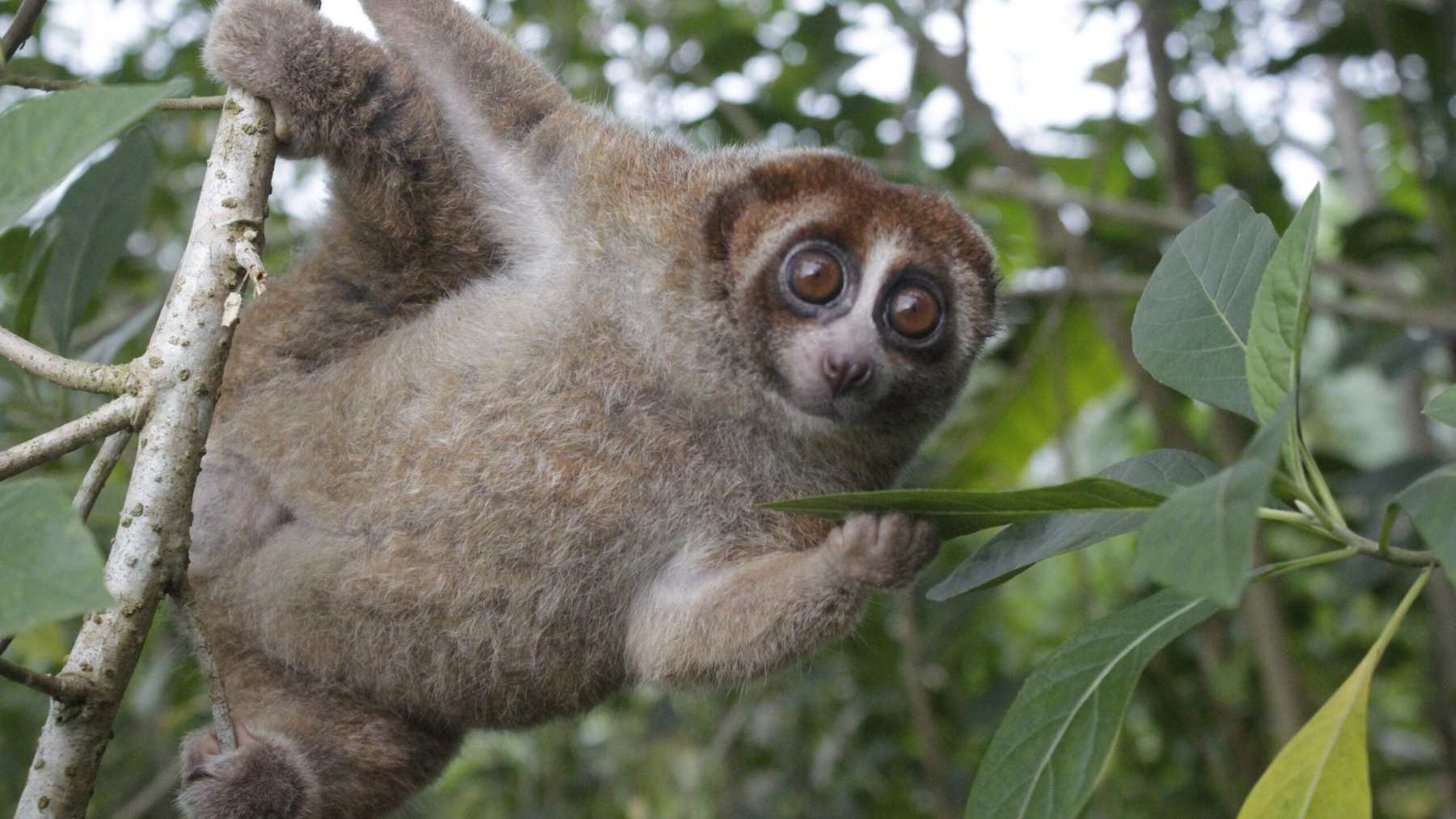
The Bangka slow loris, a venomous primate absent from scientific literature since the 1930s, is still alive. This is confirmed by a study published in October 2026 in the journal Spixiana. It is based on more than 90 specimens rescued between 2015 and 2025 on that Indonesian island.
The rescues are the work of the Alobi Wildlife Rescue Center, which operates on the island itself. The work is signed by its director, Langka Sani, and colleagues Endi Riadi and Andre Septian. Completing the list are Jochen Menner, from the Taman Safari Prigen breeding center, and Timon Glaw, from Vienna’s Haus des Meeres zoo.
The conservation organization Re:wild released the results in a statement on October 20. For that entity, the animal featured among the most sought-after primates that had disappeared from the record.
A record missing since 1937
The IUCN Red List classifies the species as Critically Endangered, possibly extinct, since its 2020 assessment. That entry places the last sighting in 1937.
The authors believe that date comes from a 1937 article about Bangka’s mammals. That text described three adult males, but did not say when or where they were captured. For that reason they do not rule out that the actual last record predates it.
The species was described in 1906 from specimens from Klabat Bay, in the north of the island. For decades it was treated as a subspecies of other lorises. An analysis of photographs and museum pieces elevated it to its own species in 2013.
In Indonesia there have been other notable rediscoveries, such as a marsupial believed extinct for more than 6,000 years. In this case, the animal never disappeared for the neighbors. «A species can disappear from the scientific record without disappearing from the lives of the people who share its home,» summarizes Benji Barca of Re:wild.
Houses, roads and electrical lines
When a neighbor or an authority calls by phone, WhatsApp, or social media, the Alobi team goes to collect the animal. Thus it gathered more than 90 lorises between 2015 and August 2025.
The study details the circumstances of 43 of them, all rescued since 2021. Of that group, 16 appeared after entering houses or gardens. Another 7 had burns compatible with an electrical discharge, most from touching power lines.
The list continues with 6 animals picked up on roads and 5 taken from the wildlife trade or captivity. Another 3 were in plantations, one entangled in a fence and another victim of a dog attack.
In the annex of the study there is a loris that was eating guavas in a Namang garden on October 26, 2024. Another arrived in Pangkal Pinang in the box of a pickup truck returning from banana plantations.
Many arrived injured and at least three died. Some had spent days or months in captivity before someone alerted the center.
86 lorises returned to the forest
After recovery, 86 individuals were released back into the wild at seven sites on Bangka. The Alobi team selected the largest forest fragments that still offer good habitat. All have some degree of legal or practical protection.
The Bukit Mangkol forest park, in the Bangka Tengah Regency, received 37 of those animals. The Permisan nature park, in Bangka Selatan, welcomed another 22, and Mount Menumbing, 15.
There were rescues in all four districts of the island and in the capital, Pangkal Pinang. According to the authors, that indicates the species may still live across much of Bangka. «Returning the Bangka slow loris to the scientific radar is only the first step,» says Glaw.
Two incisors that rule out outsiders
In Indonesia the lorises are often sold as pets, so there was a doubt about foreign origin. The skull of a dead specimen kept by Alobi helps to clear it up.
Its upper jaw has only two incisors, a trait of N. bancanus and of the lorises of Borneo. The populations of Sumatra and Java have four. Therefore the study sees it as unlikely that the animals came from those neighboring islands.
Loris are, furthermore, the only venomous primates known. According to Re:wild, they lick a gland inside the arm and mix its secretion with saliva. The resulting bite is painful and can cause swelling.
Tin, palm and a fire
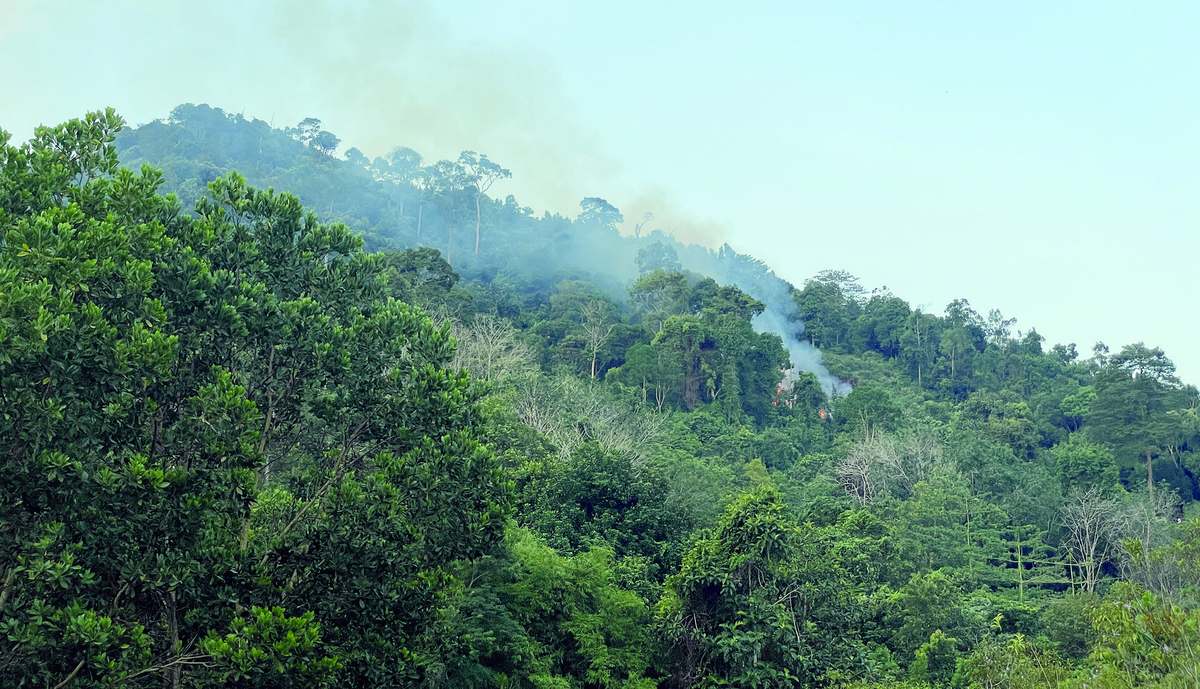
Bangka covers about 12,000 km² and has more than a million inhabitants. For more than three centuries it has been a world center for tin mining. Aerial photos of the study show forests interspersed with palm plantations, tin-mining pits, and villages.
The forest habitat of the species had been reduced by 62% between 2000 and 2012, according to an earlier study cited by the authors. Deforestation linked to palm oil continues to grow in Indonesia. «Its natural habitat has been significantly reduced,» warns Sani, who blames illegal tin mining and logging for plantations.
On July 31, 2023, the team visited Bukit Mangkol, one of the release sites. There they witnessed an intentionally set forest fire by two unknown individuals and small tin operations. They searched for lorises for several hours, also at dusk, without seeing any.
No one has yet counted how many remain
The study does not estimate how many Bangka slow lorises survive, because there are no verifiable density data. The rescues, moreover, cluster around Pangkal Pinang, near the Alobi headquarters. They mainly reflect animals that cross paths with people.
It is also unknown what happened to the 86 individuals released, as no one has tracked them. In other loris species, survival after release has been low due to fights, predators, or infections.
Genetic confirmation is needed to verify that this is a valid species, today defined only by physical traits. It is not clear whether the lorises of Belitung and Borneo are the same species.
The authors call for censuses on the three islands and a breeding program, which could be hosted by the Alobi center itself. They also want the IUCN to reconsider the designation of possibly extinct, because their data “clearly demonstrate that N. bancanus has not yet gone extinct.”
The full study has been published in Spixiana.
Photo: Andre Septian / Alobi Wildlife Rescue Center
