
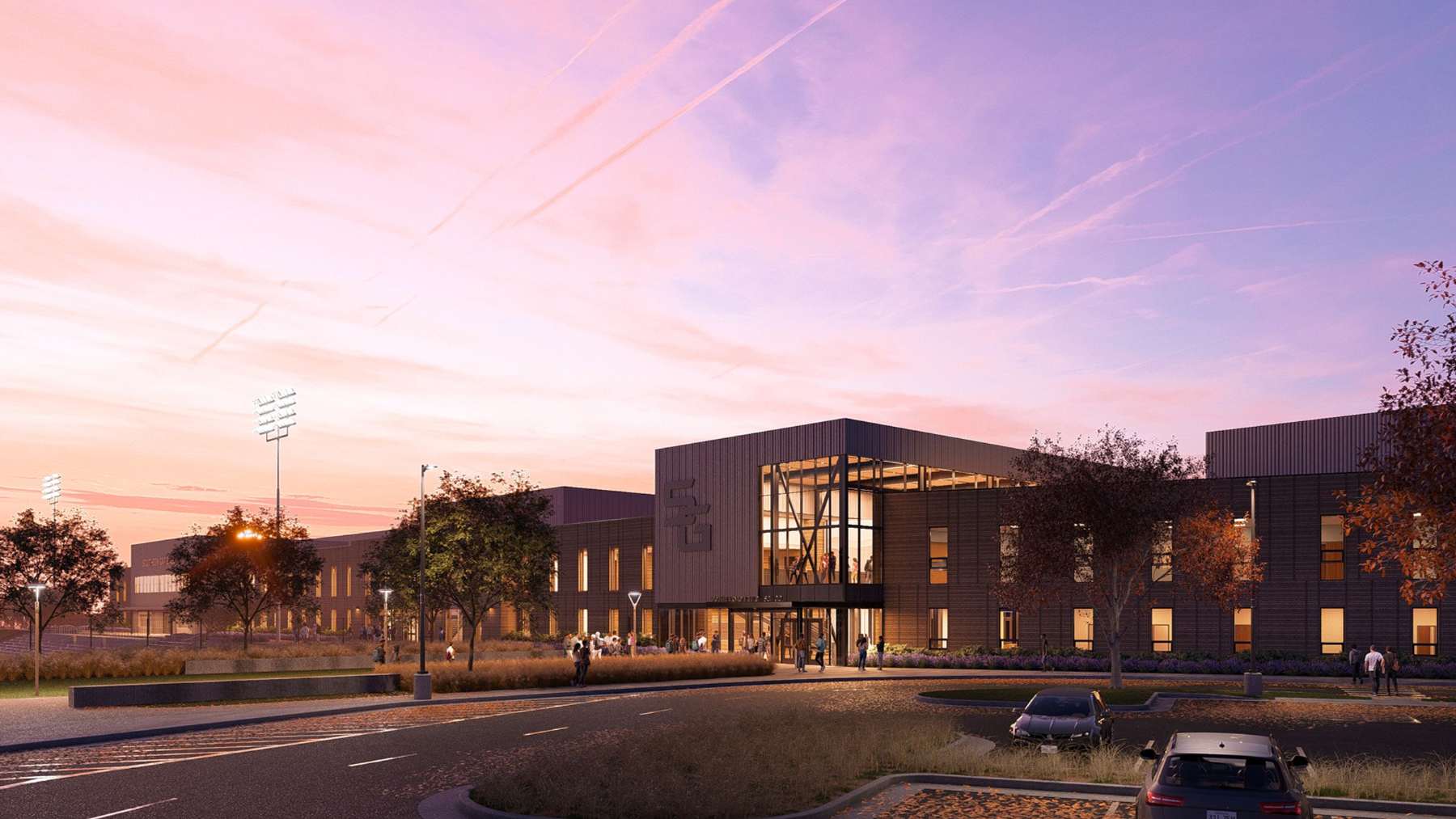
A summit in the Appalachian range once defined by coal mining now serves a purpose far different. On that site stands Southern Gap High School, a campus of about 18,580 square meters that brings together students from four schools in Buchanan County, Virginia, United States.
Classes began on August 21, 2026, and the ceremonial opening took place on August 29. Nearly 800 students share facilities that repurpose an old mining site for education, though this shift in use alone does not prove that the ecosystem has been restored.
Four Centers in One
The new high school welcomes students from Council, Grundy, Hurley, and Twin Valley. VMDO Architects explains that the union aims to provide them with the same educational resources, regardless of their origin or economic situation.
The campus blends academic subjects with hands-on training in fields such as welding, nursing, and dental assisting. Previously, those pursuing such training had to travel to Grundy’s vocational center, but now they can switch activities within the same building.
“Now they can go down the hall,” the superintendent Sherry Fletcher told the local WCYB television station. That proximity makes it easier to combine regular classes with workshops, without the commute that previously split the day between two facilities.
A Building That Remembers the Mine
A brick-lined corridor echoes the mine tunnels and connects the main areas of the building. From it emerge metal volumes inspired by the region’s industrial architecture.
The hallways offer views of the mountains and spaces to display student work. The wings house areas dedicated to performing arts, engineering, and sports.
Moving the Classrooms Away from Flooding
The site choice has another rationale beyond simply repurposing former mining land. The United States Army Corps of Engineers (USACE) determined that relocating the old Hurley campus out of the floodplain was the most cost-effective option to reduce flood damage.
In January 2021, educational authorities proposed consolidating that institute and the technical center into shared facilities at Southern Gap. The project is part of a flood-protection program tied to the damages suffered by the county in April 1977.
The official announcement of the start of construction, published in August 2024, put the project at 92 million dollars. This was the budget figure reported by USACE, which expected to complete the work by the summer of 2026.
The Challenge of Getting to the Institute
Bringing resources into a single place also changes families’ routines. A September Cardinal News report notes concerns about bus routes and recalls that narrow, winding roads complicate transportation in this mountainous area.
The piece highlights the case of a student whose ride to the new campus would exceed an hour by bus, while her previous school was about ten minutes from home. It is a specific case, but it helps explain why the location sparked debate among neighbors.
What does it mean to offer more workshops if getting to them requires an even earlier start? Southern Gap’s experience shows that expanding educational opportunities also requires attention to distances and to the time students spend on the road each day.
What It Means to Reclaim the Land
Mining that removes portions of summits profoundly reshapes the landscape. The U.S. Environmental Protection Agency explains that such operations can destroy forests, fragment habitats, and bury streams under the material extracted to reach coal seams.
These are general impacts of the method, not a campus-specific diagnosis. To assess ecological recovery, one would need data on soil, water, and biodiversity, along with evidence of what happened to ecosystems that existed before mining.
Southern Gap documents a concrete land-use change, now housing classrooms and shared community spaces. The project’s official description is published on the VMDO Architects website.
Image: VMDO Architects