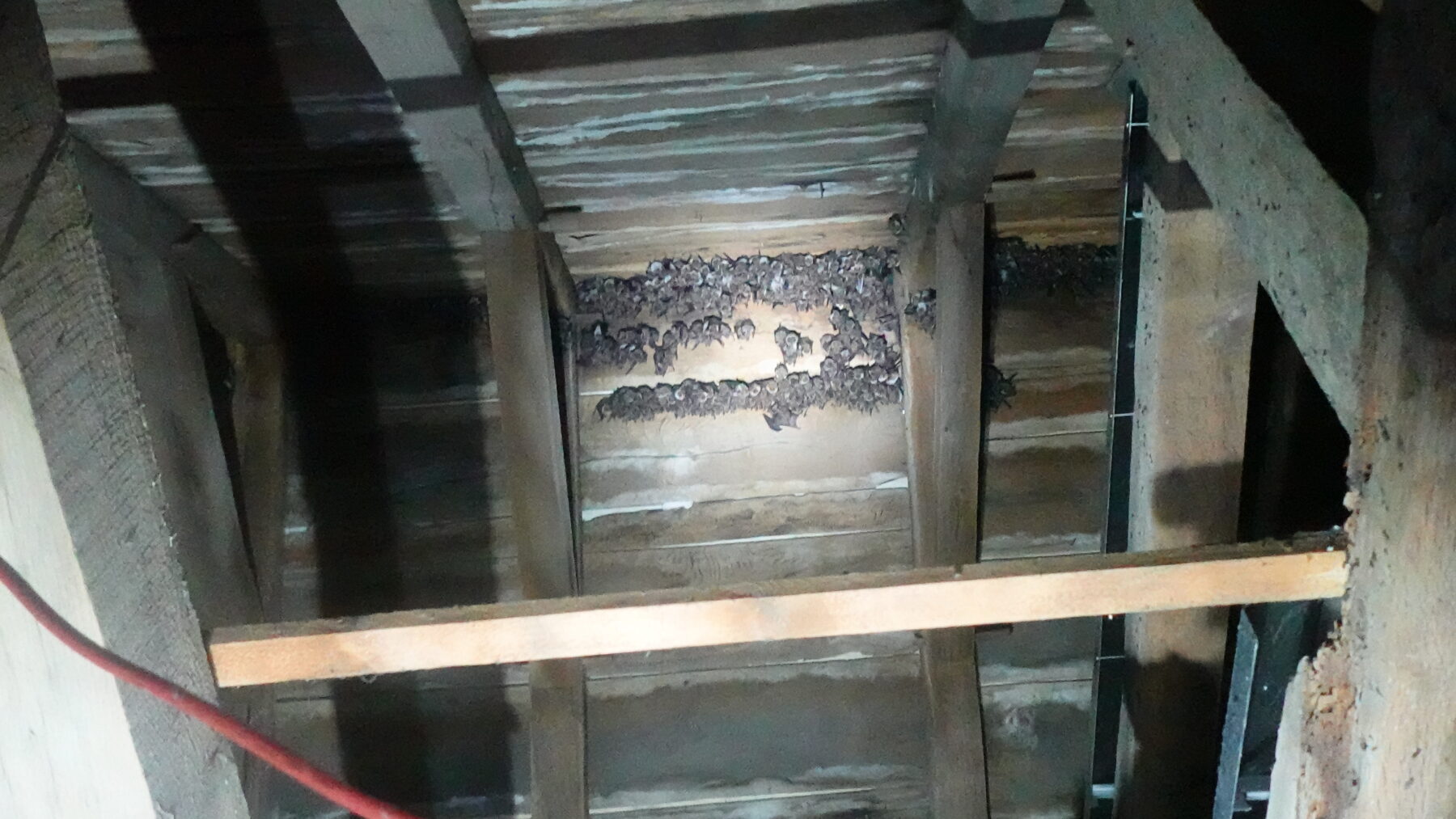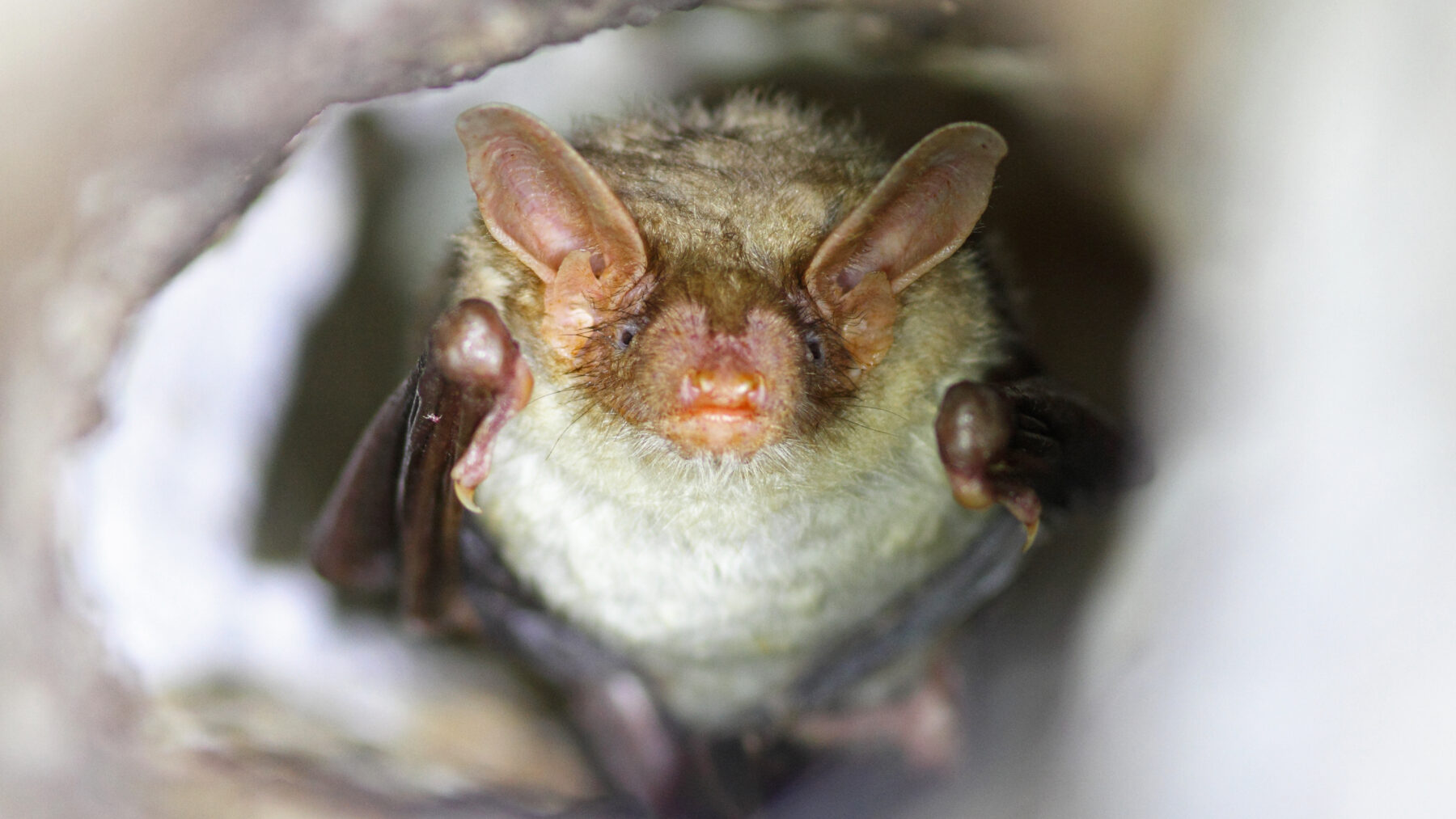
Insects. The bats living in Spain feed on insects and other small arthropods, and in surprising quantities: an individual eats every night half of its own weight, which can amount to between 500 and 1,000 insects, according to the SECEMU outreach pamphlet (Spanish Association for the Conservation and Study of Bats). All Spanish species, on the peninsula and the Canary Islands, are insectivorous. None drink blood.
The ceiling is higher still. A note from the Mammal Monitoring Group of the Complutense University of Madrid estimates that the common bat (Pipistrellus pipistrellus) can ingest on average up to 3,000 insects in a single night, two-thirds of its body weight. What is not supported by the published data consulted for this article is the figure of “a thousand mosquitoes per hour” that circulates online, so it is best not to repeat it.
How many species are there? The most recent inventory, the Spanish mammal checklist published in Galemys in 2025 by Román and colleagues, recognizes 157 mammal species in the country, and 34 of them are bats (more than one in five). The MITECO bat page still cites 32, the figure from the 2011 List of Wildlife Species, while SECEMU’s list updated in April 2026 reaches 35 because it adds Portugal and Gibraltar. Within Spain, SECEMU designates the Madeiran bat (Pipistrellus maderensis) and the Canary long-eared bat (Plecotus teneriffae) as Canary endemics.
Its reputation as a sinister creature that returns each year with Halloween night is largely due to vampires. They exist, but far from here. Only three bat species in the world feed on blood, and the best known, the common vampire bat (Desmodus rotundus), lives in warm regions of the Americas, from southern Mexico to northern Argentina and Chile, where it feeds primarily on the blood of other mammals, according to Bat Conservation International. In Spain, all species are insectivorous. (If you want to go further back in time, ECOticias offers a review of the origin of bats in Europe.)
What a Cádiz colony ate in five months
The best glimpse into the menu of a Spanish bat comes from a study by the University of the Basque Country (UPV/EHU) and the Doñana Biological Station (EBD-CSIC), published in Scientific Reports (Aihartza et al., 2023). The researchers analyzed, via metabarcoding—a technique that identifies prey from their DNA in feces—the diet of a cave-dwelling bat colony (Miniopterus schreibersii) in the Sierra de San Cristóbal, in El Puerto de Santa María (Cádiz). The colony ranged from 3,000 to a little over 7,000 individuals depending on the time of year.
The results, summarized in the CSIC press release, identified just over 160 arthropod species in their diet, 39 of which were considered pests. Between May 11 and October 10, the colony consumed about 1,610 kilograms of pest insects.
The star prey was the pine processionary caterpillar. At the peak of its moth flight, when the colony reached a maximum of 7,200 individuals, it consumed as much as 6 kilograms per day, about 60,000 moths (each weighing around 0.1 grams). The figure refers to the entire colony, not a single bat: roughly eight moths per bat per night. Across the season this translated into about 173 kilograms of processionary caterpillars, 1.73 million fewer moths in the area.
The samples also revealed the common mosquito (Culex pipiens), a vector of West Nile virus, and the cigaritta Neophilaenus campestris, a vector of the bacterium Xylella fastidiosa, considered a serious threat to European agriculture.
A pest-control service that costs nothing
That appetite has practical value, since some farmers take advantage of it. The UCM note notes that in the delta rice fields of the Ebro Delta, bat shelters are placed to combat the rice borer (Chilo suppressalis), one of the most damaging pests of that crop.
Valuing that service is difficult, and in Spain it has not been done with a single global figure. The most cited reference comes from North America: a 2011 Science paper by Boyles, Cryan, McCracken, and Kunz estimated that the disappearance of bats could cost farming in the United States and Canada more than 3.7 billion dollars per year, according to the USGS summary. It is a calculation for that continent and cannot be translated identically to Spanish fields, but it gives an idea of the order of magnitude.
All protected, with around a dozen endangered
All bat species living in Spain are included in the List of Wildlife Species with Special Protection, regulated by Royal Decree 139/2011, as recalled by MITECO on its bat page. That means the protected-species regulations prohibit killing, capturing, disturbing, or destroying their shelters.
According to MITECO, twelve of them are also listed in the Spanish Catalogue of Threatened Species, mostly in the Vulnerable category. Among them are the greater, Mediterranean, and lesser horseshoe bats (Rhinolophus ferrumequinum, R. euryale and R. mehelyi), the cave bat associated with the Cádiz colony, the big noctule (Nyctalus lasiopterus), and the Canary long-eared bat. The bat Myotis capaccinii, a species strongly linked to rivers and reservoirs, is listed as Endangered.
Rabies, bites and what to do if you find one
The risk exists, but it is small and can be avoided with a simple rule. European bats can carry lisavirus, a group of viruses related to classic rabies. The rabies surveillance program signed by the ministries of Agriculture, Health and Science counted 39 cases of rabies in bats declared in Spain, almost all caused by the European bat lisavirus type 1 (EBLV-1) in the Serotine bat (Eptesicus serotinus and E. isabellinus) and one by lisavirus Lleida in a cave bat. The document, dating from around 2020–2021, notes that rabies in bats is endemic across Europe and that Spain has been free of terrestrial rabies since 1978, with the exception of a single imported case from Morocco in 2013.
For the general population, the danger is “very low,” according to a September 2018 SECEMU note signed by Juan Emilio Echevarría of the National Microbiology Center (ISCIII). Across Europe only four cases of human rabies transmitted by bats have been recorded, the latest in the United Kingdom in 2002. The specialist’s recommendation can be summed up in one line: the public “only needs to know not to touch any bat.”
If one still appears on the ground, on a terrace, or inside a home, SECEMU’s guide and its pamphlet advise the following steps:
- Do not pick it up with bare hands. Use gloves of varying thickness or, if it is an adult, wrap it in a towel, as it might bite to defend itself.
- Check if it is a juvenile. Juveniles have little or no fur. They should be returned to their roost or taken to a wildlife rehabilitation center, or notify forest rangers.
- If it is an active adult that has wandered indoors, simply open the windows so it can exit on its own at dusk.
- If it does not leave, handle it with gloves, leave it quietly in a box until nightfall, and release at dusk from a height. If it does not take flight, take it to a rehabilitation center: adults can appear dead when cooled, so make sure it moves.
- If you are bitten, go to a doctor who will assess post-exposure prophylaxis for rabies, and preserve the bat if possible so it can be analyzed.
There is one separate case, the colonies installed on a roof, in an attic, or behind a shutter. Because these are protected species, SECEMU recommends contacting the regional Environment Department before taking any action, and Echevarría’s note adds that no one should act on their own.