
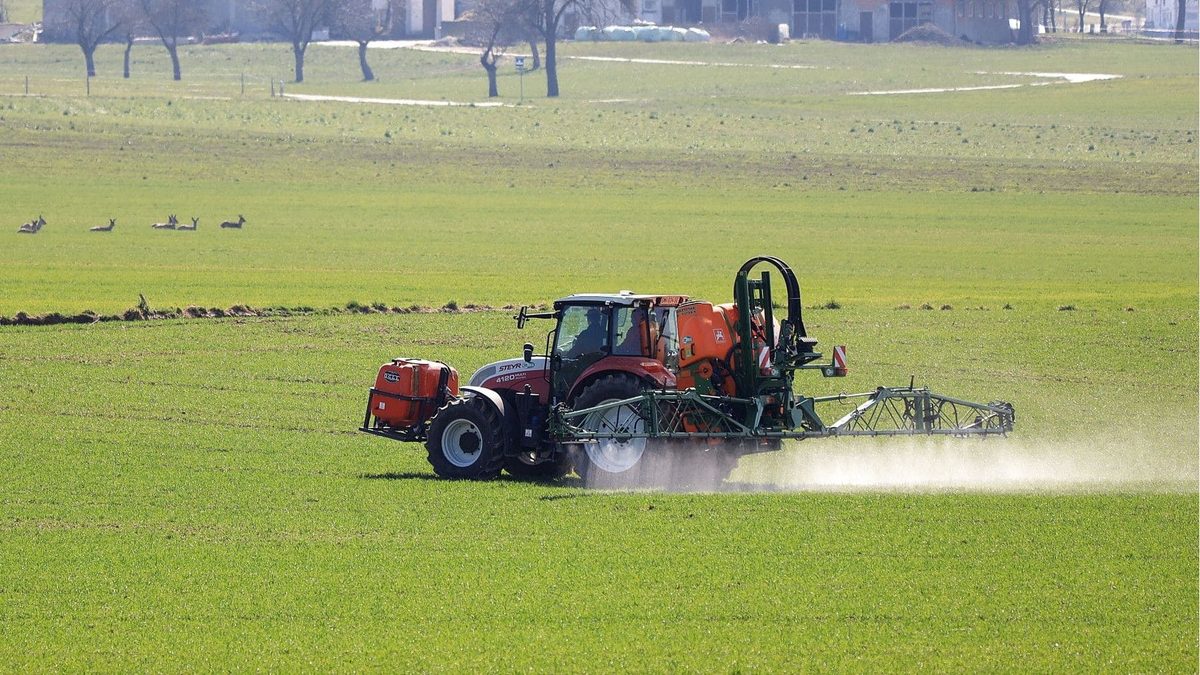
The World Day Against the Indiscriminate Use of Agrochemicals 2026, observed today on November 26, invites us to curb unnecessary applications, improve pest prevention, and promote farming practices that safeguard biodiversity.
World Day Against the Indiscriminate Use of Agrochemicals 2026: it is possible to reduce their use
The World Day Against the Indiscriminate Use of Agrochemicals 2026, on November 26, focuses on protecting crops by reducing impacts on the soil, water, and biodiversity. Prevention, training, and monitoring of plots enable interventions to be evidence-based and to avoid applying treatments that are unnecessary.
The term agrochemicals covers several different products: fertilizers provide nutrients, while crop protection products shield plants from harmful organisms. Their risks depend on the substance, the dose, exposure, and the conditions of use. An incorrect application can affect non-target species or promote environmental contamination.
Crop rotations, planting resistant varieties, and preserving beneficial fauna are part of preventive alternatives. Certified organic production applies specific restrictions and prioritizes these strategies, although it also allows certain approved substances. Progress requires combining agronomic knowledge, research, and effective tools that allow maintaining production with lower environmental risks.
World Day Against the Indiscriminate Use of Agrochemicals 2026: why today is a key date for the planet’s health
As every November 26, today we commemorate the World Day Against the Indiscriminate Use of Agrochemicals 2026. A date established by the Pesticide Action Network (PAN), thanks to the initiative of the 400 organizations that comprise it.
That day was chosen to commemorate the victims of the accident that occurred in India when a gas called methyl isocyanate, produced by Union Carbide Corporation to manufacture pesticides, claimed the lives of more than 25,000 people and left many others injured with severe sequelae, in the Indian city of Bhopal in 1984.
What are agrochemicals and why do scientists and health professionals worry?
Agrochemicals are chemical products routinely used in farming to maintain and safeguard crops. Their use is generally associated with the aim of supplying nutrients to crops, eliminate insects or other organisms that negatively affect them, as well as combat weeds, parasitic agents, and fungi.
The objective of these products is to maximize the yield of any agricultural operation, i.e., to produce more to gain higher economic profitability; the problem is that these substances can be harmful, even in small amounts.
This concept is widely used in agriculture, and more specifically in the field of agrochemistry or agricultural chemistry, a branch of chemistry that studies the biochemical reactions that affect the development of animals and plants. This constitutes one of the motivations for the celebration of the World Day Against the Indiscriminate Use of Agrochemicals 2026.
This discipline, therefore, examines the use of various organic substances and studies the application of chemical products such as pesticides and fertilizers in agriculture and their possible effects on local flora and fauna.
Pesticides, herbicides and fungicides: how they work and what risks do they entail?
Pesticides, which are among the most used agrochemicals, are applied to crops through spraying in order to eliminate or prevent fungi, bacteria, insects, or any other organism that could seriously affect the crops’ development, something highlighted in the World Day Against the Indiscriminate Use of Agrochemicals 2026.
Because informally any type of damage to crops is called pests, the agrochemicals that attack them are generically referred to as pesticides; however, when fungi must be fought they are called fungicides, to kill insects insecticides are used, and to eliminate weeds, herbicides are employed.
Chemical fertilizers: quick benefits and lasting impacts
Chemical fertilizers are also used when soils underperform, are degraded, or when a particular crop has exhausted them. For this, fertilizers based on different agrochemical compounds are added.
For many years this type of agrochemicals has been used almost without control; in fact, there are many that are completely banned, hence the need to create the World Day Against the Indiscriminate Use of Agrochemicals 2026.
A prime example of these highly toxic products with widespread use is DDT, banned since the 1970s. And others whose use is debated, to such an extent that there are countries that do not permit their application, although in others it is still used, as is the case with glyphosate.
What cannot be ignored, especially today, World Day Against the Indiscriminate Use of Agrochemicals 2026, are the negative and harmful effects that these agrochemical products tend to have on the soil, biodiversity, the environment, and even people.
While they offer direct and tangible benefits to crops, they can also affect the health of people who come into contact with them and, in some cases, contaminate the environment, causing serious damage.
On the World Day Against the Indiscriminate Use of Agrochemicals 2026 it is recommended to handle them with care and carefully consider the context in which they are applied. Gloves and masks should be worn during application and they should not be disposed of in areas where animals and people interact.
All agrochemicals are highly toxic and contact with them, whether by touch, ingestion, or inhalation, can be fatal. The point is that, if we are going to consume foods produced with these products, we should not introduce any kind of poison at any stage of their production.
Organic foods: the safest alternative for people and ecosystems
And without a doubt, there is nothing better than organic foods, which are free from any type of agrochemicals, since they are grown in areas that have been carefully delineated to keep them free of pesticides and chemical fertilizers, something to highlight on the World Day Against the Indiscriminate Use of Agrochemicals 2026.
Pollinators and agrochemicals
Protecting agricultural biodiversity also helps ensure food production. According to the FAO, around 75% of the types of food crops worldwide depend, at least partially, on animal pollination.
That proportion refers to crop diversity, not the total volume of food produced. On the World Day Against the Indiscriminate Use of Agrochemicals 2026 it is vital to preserve refuges and floral resources, and avoiding unnecessary exposure of pollinators to agrochemicals helps maintain a service on which numerous fruits, vegetables, and seeds depend.